The Power of Culture in the Math Classroom!

India White • July 1, 2023

The Power of Culture in the Math Classroom!

The Power of Culture in the Math Classroom

Mathematics is a subject that is often viewed as abstract and disconnected from the real world. Many students struggle to see the relevance of math in their daily lives, which can lead to disengagement and a lack of interest in the subject. However, by incorporating cultural elements into the math classroom, teachers can help students connect math to their own experiences and backgrounds, making the subject more meaningful and engaging. Need an example? Consider talking about Lebron James shooting hoops on the basketball court and watch to see how many students of diverse backgrounds will perk up during a bell work activity.

Culture has been a powerful tool for connecting students to math. Studies have shown that students of diverse backgrounds feel more connected during their learning when their culture is a part of the learning process due to the sense of belonging that comes along with it. If you want to take your classroom from being strictly about math where students might yawn out of a lack of relevance and connection, to the engaged class where students steal the moment of instruction from you, consider incorporating cultures of your learners into your instructional delivery! 

Here are four ways that teachers can use culture to help students connect math in the classroom:

1. Use Culturally Relevant Examples to Connect Students to Real World

When teaching math concepts, use examples that are relevant to your students' cultures and experiences. For example, if you are teaching fractions, use examples of traditional foods that are divided into fractions, such as pizza or pie. However, don’t just limit the type of pie to the traditional pies of the nation. Try to find out from learners what other types of pie or dishes that are served in similar shapes can you highlight during instruction so they can have a sense of pride in their culture while learning. This will help students see the relevance of math in their own lives and make the subject more relatable. Once students make the connection, it will spike a sense of engagement, which will also contribute to stronger relationships created between student and teacher and peer-to-peer while learning. 

2. Incorporate Cultural Artifacts and Mathematicians into Instruction

Incorporating cultural artifacts into the math classroom can help students connect math to their own cultures. . For example, if you are teaching geometry, you could create a project on and use traditional patterns from Egyptians, Grecians, and other cultural groups to teach about various elements of geometric figures, i.e. area and surface area of right square pyramids, etc. Further, you can highlight the mathematicians of those ages and embrace the moment of history that respects the sense of genius that existed from leaders who built the pyramids in Africa, to Greek Mathematicians and beyond. Students will have the opportunity to embrace the revelation behind the beauty and relevance of math in different cultures. Once this happens, when a student reads another complex math problem about pyramids, they can enjoy the opportunity to imagine those leaders in action as they take on the metacognitive approach towards comprehension and proficiency.

3. Implement Culturally Responsive Teaching Strategies with Fidelity

Culturally responsive teaching strategies are teaching methods to students intentionally designed to meet the needs of diverse learners. By using these strategies, teachers can create a classroom environment that is inclusive and welcoming to their students in a way that celebrates their culture, language, and way of life. For instance, educators can use cooperative learning strategies that encourage students to work together while sharing various components of their cultural backgrounds during group work, partner work and beyond. Teachers can assign projects via project-based learning activities that will incorporate ideas that welcome culture and diverse experiences within the math space. For instance, being intentional to welcome all cultures on a group project for Pi Day (March 14th), and empowering student voice such that all cultural groups are not only made to feel welcome but are discussed in the math curriculum and during instructional delivery and during mathematical discourse from ALL learners. This will help eliminate moments of awkward silence that exists when students are presented with a culture, they aren’t familiar with. It will break down walls that exist within social engagement and help students respect and empathize with peers who are different from them as they get to know them and their unique differences. 

4. Celebrate Cultural Diversity Among Learners!

Celebrating cultural diversity that exists within the math classroom is imperative for helping learners of various ethnic groups feel valued and respected. Teachers can find out background information of their students and follow up with efforts to connect their cultures by incorporating cultural celebrations and holidays into their math lessons, such Black History Month, Cinco De Mayo, Chinese New Year, Kwanza, or other holidays. This will help students see the connections between math and their own cultures, and various cultures of their peers. When cultural diversity is achieved appropriately, students will defend the cultures of their peers as much as they defend their own culture and will understand the value of cherishing everyone as a part of the human race. One way you can demonstrate a celebration of cultures is by hanging up various flags of your students’ culture groups across the classroom. Further, you can get the community involved and invite parents and community stakeholders into your classroom to talk about great components of their culture, language and various holidays that might be overlooked or unknown. As cultural diversity is implemented, and relationships are established, respect is enhanced, and students will be willing to support and protect the learning environment. This will lead to a true culture of learning that can be felt and embraced in the math classroom by the students, teachers and administrators who stop by to support. Further, students will trust taking a risk in this environment because they will be convinced that not only do they belong, but their voices are heard and valued.

Conclusion 

In conclusion, culture being infused in the math classroom is a significant and powerful tool for connecting students to math in the classroom. This will help cultivate a desire for math and real-world connections beyond the classroom. By using culturally relevant examples, incorporating cultural artifacts, diverse mathematicians, using culturally responsive teaching strategies, and celebrating cultural diversity among learners, teachers can help students see the relevance of math in their own lives and make math more relevant and engaging. Embrace the power of culture in your math classroom and watch your classroom come alive like never before!
By India White January 29, 2026
๐ŸŒŸ What an ABSOLUTELY PHENOMENAL time at UCTM presenting on grit games! ๐ŸŽ‰ The educators in Utah are truly AMAZING! I feel so blessed to share insights on grit and connect with new friends—cheering each other on to get pumped up again! ๐Ÿ’ชโœจ Had a hilarious time trying to throw hoops with Dan (I only made ONE shot—let’s just say my accuracy needs some work! ๐Ÿ˜‚๐Ÿ€). It was fantastic to connect with such inspiring friends and leaders in the math community, sharing exciting updates that Savvas has for all the math teachers out there! ๐Ÿ“š๐Ÿ” BIG shoutout to the UCTM board, Jackie, the Savvas team, and all the incredible Utah educators! Thanks for a blast of a time! ๐Ÿš€๐Ÿ™Œ #GritAndGames #UpliftEducators #MathMagic #ConnectAndInspire #SavvasUpdates #FunInEducation โœจโค๏ธ (I don’t own music copyright)
By India White January 28, 2026
I am incredibly grateful for the opportunity to speak at UCTM 2026. The energy in the rooms was powerful, and several sessions were filled with educators eager to grow, reflect, and strengthen their practice—especially during my session on building gritty thinking in the classroom. Experiences like this remind me why this work matters so deeply. Teachers came ready to engage in meaningful conversations about productive struggle, perseverance, and how to move beyond surface-level engagement into true student thinking. One of the highlights was hearing how excited educators were about the new Savvas math books and the way these resources support conceptual understanding, collaboration, and confidence for learners at all levels. When curriculum, instruction, and mindset align, we truly begin to bridge the gap for students. At the heart of these conversations was the powerful connection between Thinking Classrooms and my G.R.I.T. Framework—Growth Mindset, Resilience, Self-Efficacy, and Time Management. Together, they create learning environments where students don’t just solve problems, they learn how to persist, reflect, and believe in themselves. Building grit starts with a growth mindset. In a thinking classroom, struggle is not a setback—it’s evidence of learning. Teachers can normalize this by celebrating multiple strategies, modeling mistakes, and using language that reframes being “stuck” as part of the thinking process. When students understand that effort and revision are expected, they engage more deeply and take greater ownership of their learning. Resilience grows through collaboration. Thinking classrooms thrive when students work together, share ideas, and wrestle with concepts as a team. Random grouping, structured roles, and intentional math discourse help students learn that perseverance is strengthened in community. When learners support one another, they build confidence and stamina to tackle challenging tasks. Self-efficacy develops when student thinking is valued. Using vertical non-permanent surfaces like whiteboards lowers the fear of making mistakes and encourages risk-taking. Asking students to explain their reasoning and highlighting their ideas—whether complete or still developing—signals that their thinking matters. Over time, students begin to see themselves as capable mathematicians. Time management is another critical component of grit. Teachers can support this by breaking tasks into phases, using visual timers, and guiding students to reflect on how they used their time. These habits help students learn to pace themselves, stay focused, and persist through complex problems—skills that extend far beyond the math classroom. The questions we ask also shape gritty thinking. Instead of rescuing students, we can ask questions that prompt reflection and strategy: What do you already know? What have you tried so far? What could you try next? These questions keep students engaged in the process and strengthen their independence as thinkers. Finally, reflection brings it all together. Ending lessons with opportunities for students to reflect on effort, strategies, and moments of perseverance reinforces that grit is just as important as correctness. When we celebrate persistence as much as achievement, students learn that growth happens over time. UCTM 2026 was a powerful reminder that educators everywhere are committed to creating classrooms where students feel supported, challenged, and empowered. I am grateful for every teacher who showed up ready to learn, collaborate, and push their thinking. Let’s stay gritty, keep learning together, and continue bridging the gap so every learner has the opportunity to thrive.
By India White January 23, 2026
๐ŸŽ‰ Exciting news, teachers! ๐ŸŽ“โœจ I’m gearing up for an amazing trip to UCTM, and I want YOU to join the fun! Don’t forget to check out my latest video where I reveal some fantastic door prizes that could be yours! ๐ŸŽ๐Ÿ™Œ Let’s connect, learn, and make unforgettable memories together. Click the link and find out how you can win! ๐Ÿš€๐Ÿ’ผ ๐Ÿ‘‰โœจ #UCTM2026 #TeachersRock #drindiawhite #nabse @#foryou (I don’t own copyright to music ) Let’s make this an event to remember! ๐Ÿ™๐ŸŽ‰
By India White January 18, 2026
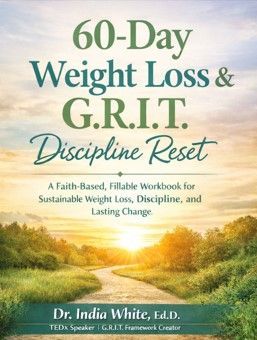
It’s Official! The 60-Day Weight Loss & G.R.I.T. Discipline Reset Has Launched ๐ŸŽ‰ I’m excited to officially announce the launch of my newest transformational experience—the 60-Day Weight Loss & G.R.I.T. Discipline Reset! This course has been thoughtfully designed for individuals who are ready to stop starting over and finally build the discipline, consistency, and mindset needed to see lasting results. Led by Dr. India White, this 8-week online course goes beyond traditional weight loss programs. It focuses on sustainable change through my proven G.R.I.T. Framework: Growth Mindset, Resilience, Self-Efficacy, and Time Management. This isn’t about extremes or quick fixes—it’s about building habits that fit real life and last well beyond 60 days. What’s Included Participants receive access to: * An introductory video to reset your mindset and set clear expectations * Eight weekly modules that build discipline step by step * A conclusion video to help you transition from a reset to a lifestyle Each week is intentionally structured to help you strengthen both your body and mind, so progress doesn’t disappear once motivation fades. Why This Course Works So many weight loss programs focus only on what to eat or how to exercise—but they ignore the mental discipline required to stay consistent. This course fills that gap. You’ll learn how to: * Stay resilient during setbacks * Manage your time realistically * Build confidence through small, sustainable wins * Create routines that work even on busy days To deepen the experience, I highly encourage participants to pair the course with the 60-Day Weight Loss G.R.I.T. Workbook, available on Amazon. The workbook provides daily reflections, habit tracking, and accountability tools that align with each week of the course. Who This Course Is For This course is perfect for: * Individuals ready to lose weight with structure and purpose * Busy professionals, educators, leaders, and entrepreneurs * Fitness trainers and wellness professionals * Anyone seeking discipline, clarity, and long-term results Enroll Today If you’ve been waiting for the right time to recommit to your health, this is it. The 60-Day Weight Loss & G.R.I.T. Discipline Reset course is now live and ready for you. ๐Ÿ‘‰ Click the link to purchase and enroll today ๐Ÿ‘‰ Start your 60-day reset ๐Ÿ‘‰ Build discipline that lasts a lifetime Your healthiest, most disciplined self is within reach—and G.R.I.T. is the bridge to get you there.
January 15, 2026
From Homelessness to Hope: Moving from Surviving to Thriving at Resilient Beyond Measure Serving as a keynote speaker at the Resilient Beyond Measure Conference was not only fun, it was deeply meaningful. The room was filled with leaders, educators, and purpose-driven individuals who were hungry for more—more clarity, more impact, and more hope. That collective energy reminded me why I continue to show up and share my story. During my keynote, I spoke candidly about my journey—one that did not begin on a stage, in a boardroom, or with titles behind my name. I shared how I once experienced homelessness, uncertainty, and moments where survival was the only goal. There were seasons when simply making it through the day felt like the win. Yet, through grit, faith, discipline, and relentless perseverance, that season did not define my destination. Today, by God’s grace and years of intentional work, I now serve as a math textbook author, educator, national speaker, and entrepreneur, helping impact millions of students, teachers, leaders, and organizations across the nation. My story is living proof that where you start does not dictate where you finish. At the heart of my keynote was a bold challenge: we must stop normalizing survival mode. Survival is reactive. Thriving is intentional. I shared my G.R.I.T. framework, which continues to be the foundation of my work and message: Growth Mindset — shifting from “I can’t” to “I’m learning” Resilience — developing the stamina to rise again and again Self-Efficacy — believing deeply that you are capable and equipped Time Management — aligning time with purpose, not pressure When these four pillars work together, individuals don’t just cope—they transform. One of the metaphors that resonated strongly with the audience was the idea that many of us are living and leading in low-level energy spaces, when we were designed for more. I described this as moving from survival-level “beta rays” toward higher levels of clarity and impact. Beta represents survival mode —stress-driven, reactive, exhausted, and constantly responding to emergencies. Alpha reflects stability and focus —calmer thinking, reflection, and clearer decision-making. Theta symbolizes creativity and deep connection —innovation, vision, and problem-solving begin to flourish. Gamma represents peak performance and transformation —high-level thinking, purpose, alignment, impact, and legacy. Thriving means intentionally moving away from beta-level survival and stepping into gamma-level living and leadership—where our actions are aligned with purpose, vision, and long-term impact. I want to extend my sincere thanks to Jackie Walker for the invitation and opportunity to keynote such a powerful conference. Resilient Beyond Measure created a space where authenticity, healing, and growth were not just encouraged—they were activated. It was truly an honor to serve and connect with such an inspiring community. I was also excited to share my newest book, Stop Surviving, Start Thriving, which expands on the message of the keynote and provides practical tools to help readers move from burnout to breakthrough. The book is accompanied by a new course designed to walk participants step by step through applying the G.R.I.T. framework in real life—not just reading about it, but living it. In addition, leaders are invited to explore the G.R.I.T. Workbook for Leaders, created to support sustainable leadership, confidence, resilience, and intentional growth. If this message resonates with you, I would love to stay connected. Visit my website at www.india-white.com to learn more about my work, speaking engagements, and resources. Both Stop Surviving, Start Thriving and the G.R.I.T. Workbook for Leaders are available today! Whether you are an educator, leader, entrepreneur, or someone simply ready for more, remember this: you were never meant to just survive. With grit, vision, and intention, thriving is not only possible—it’s your calling. With gratitude and grit, Dr. India White
By India White January 14, 2026
EXCITING NEWS!! I am thrilled to share some incredible news with you all! After months of hard work and dedication, I am proud to announce the launch of my new book, "Stop Surviving, Start Thriving: A Grit Framework for Leaders." This book is designed to empower leaders like you with the insights and strategies needed to elevate your leadership journey and truly thrive in today’s challenging environment. What You’ll Discover in My Book In "Stop Surviving, Start Thriving," I delve into the grit framework that will help you harness your strengths, overcome obstacles, and lead with confidence. Whether you’re an established leader or someone just starting your journey, this book is filled with practical advice and actionable steps to make a meaningful impact. Why This Book Matters: - Transformational Insights: Learn how to shift your mindset from merely surviving to genuinely thriving in your role. - Practical Strategies: Gain access to tools and techniques that you can implement right away to enhance your leadership effectiveness. - Inspiration: Discover stories and examples that will motivate you to take your leadership to the next level. Introducing the Stop Surviving, Start Thriving Course! In addition to the book, I am thrilled to announce the launch of the Stop Surviving, Start Thriving Course! This course complements the book perfectly, providing you with an interactive experience to dive deeper into the concepts covered and gain practical tools that you can use in your daily leadership practice. What to Expect from the Course: - Interactive Learning: Engaging modules that challenge you to think critically and apply lessons to your leadership style. - Real-Life Applications: Practical exercises and discussions that make the concepts relatable and actionable. - Community Support: Join a network of like-minded individuals who are also on their journey to thrive! Where to Find the Book and Course You can grab your copy of "Stop Surviving, Start Thriving" on Amazon by following this link: Amazon Link ( https://a.co/d/c8BNlS9 ). ๐Ÿ“– For those eager to join the course, it's available on my website here: Stop Surviving, Start Thriving Course ( https://www.india-white.com/store/Stop-Surviving-Stop-Thriving-Online-Course-p657410057 ). ๐ŸŒ Join Me on This Transformative Journey! I am so excited about this new chapter and can’t wait for you to explore the book and course. Together, let’s stop surviving and start thriving! Your leadership journey begins now. Thank you for your continued support, and I look forward to hearing your thoughts on the book and the course! Let’s thrive together! ๐Ÿ’ฅ
By India White January 2, 2026
I’m Excited to Speak at UCTM 2026 in Utah! I’m thrilled to share that I’ll be a featured speaker at the Utah Council of Teachers of Mathematics (UCTM) 2026 Conference, taking place January 27–28, 2026. This is one of the most energizing professional learning events for math educators in the region, and I’m honored to be part of it alongside so many inspiring teachers, leaders, and advocates for high-quality math instruction. (Utah Council of Teachers of Mathematics Join Me on January 27 Mark your calendars for Tuesday, January 27—I’ll be leading a session all about building grit in the math classroom. In this time together, we’ll explore practical strategies you can use right away to help students move from simply surviving challenging content to thriving academically and personally. We’ll dive into: * Why grit matters for deeper mathematical learning * How to cultivate a Growth Mindset as a classroom culture * Practical moves that strengthen Resilience, Self-Efficacy, and Time Management in students * Tools and classroom structures that support persistence and confidence Teachers will leave with usable ideas that support both student agency and equitable access to rigorous mathematics. Why This Matters for Math Educators Math classrooms are rich with productive struggle, complex problem-solving, and opportunities for sense-making. But without intentional support, students often interpret difficulty as inability. When we teach for grit in math, we help students understand that struggle is not a barrier—it’s a pathway to understanding and confidence. This is especially important in mathematics education because sustained effort and reflection are necessary for students to move from procedural fluency to conceptual understanding, reasoning, and sense-making. About the UCTM Conference The Utah Council of Teachers of Mathematics (UCTM) hosts this annual conference to bring together educators for learning, connection, and inspiration. UCTM 2026 will feature sessions, panels, and presenters focused on best practices in math teaching and leadership. (Utah Council of Teachers of Mathematics[2]) Whether you’re a classroom teacher, instructional coach, math specialist, or school leader, UCTM offers an opportunity to grow your practice and expand your professional learning network. Let’s Thrive Together I hope you’ll attend my session on January 27 and join the conversation about how we can design classrooms that empower students to thrive—academically, socially, and emotionally. When we build grit with intention, students not only persevere—they grow in confidence, agency, and joy in the mathematics. See you in Utah! — Dr. India White References [1]: https://www.utahctm.com/registration-1 "UCTM 2026 Conference Registration" [2]: https://www.utahctm.com/ "Utah Council of Teachers of Mathematics"
By India White January 2, 2026
It’s Time to Go from Surviving to Thriving Through Grit As a new year begins, many leaders feel pressure to reset, refocus, and recommit—yet they do so while still carrying exhaustion from the year before. Survival mode has become normalized in leadership spaces, often disguised as dedication, resilience, or grit. Research shows that chronic survival mode leads to diminished performance, disengagement, and burnout over time (Maslach & Leiter, 2016). Surviving may keep leaders functioning, but it does not allow them to flourish. This year offers an opportunity to lead differently by embracing grit as Great Resilience in Time. My G.R.I.T. Framework—Growth Mindset, Resilience, Self-Efficacy, and Time Management—is designed to help leaders build capacity over time rather than deplete it. When these four pillars work together, leaders are better equipped to sustain motivation, adapt to challenge, and lead with clarity and care (OECD, 2020). Below are seven research-informed ways leaders can move from surviving to thriving in the new year through grit. Thriving Tip 1: Redefine Grit as Sustainable Persistence Grit is often misunderstood as pushing harder or lasting longer, but research demonstrates that persistence without recovery increases the risk of burnout rather than long-term success (Maslach & Leiter, 2016). Duckworth (2016) emphasizes that grit involves sustained effort toward meaningful goals, not blind endurance. When leaders redefine grit as Great Resilience in Time, they recognize that adaptation, rest, and strategy are essential to persistence. Thriving begins when effort is aligned with purpose and supported by systems that protect wellbeing. Thriving Tip 2: Practice a Growth Mindset in Leadership Decisions A growth mindset allows leaders to view challenges as opportunities to learn rather than threats to competence. Research shows that leaders who believe abilities can be developed are more likely to seek feedback, experiment with new strategies, and foster learning cultures (Dweck, 2006). Within the G.R.I.T. Framework, growth mindset is foundational because it shapes how leaders interpret setbacks and progress. Leaders who thrive consistently ask, “What can I learn from this?” rather than internalizing failure as a fixed trait. Thriving Tip 3: Build Resilience That Includes Recovery Resilience is not about ignoring stress but responding to it effectively. Studies indicate that sustainable resilience requires emotional regulation, access to support, and intentional recovery practices (Hobfoll, 2002). In the G.R.I.T. Framework, resilience means bouncing forward—not simply pushing through. Leaders who thrive schedule recovery as a leadership responsibility, understanding that restoration is directly connected to long-term effectiveness and decision quality (OECD, 2020). Thriving Tip 4: Strengthen Self-Efficacy Through Action Self-efficacy refers to a person’s belief in their ability to execute actions required to achieve specific goals (Bandura, 1997). Strong self-efficacy has been consistently linked to higher motivation, persistence, and performance across leadership contexts. Within the G.R.I.T. Framework, self-efficacy is built through mastery experiences, small wins, and visible progress—not positive thinking alone. Leaders thrive when they intentionally design opportunities for success and reinforce evidence of capability in themselves and others. Thriving Tip 5: Treat Time Management as Energy and Attention Design Time management is not about cramming more tasks into a day; it is about protecting focus and energy for what matters most. Research on cognitive load and attention shows that constant interruption undermines decision-making, creativity, and wellbeing (Maslach & Leiter, 2016). In the G.R.I.T. Framework, time management functions as a leadership system that aligns priorities with purpose. Leaders who thrive design calendars that reflect values, reduce unnecessary complexity, and preserve space for deep work and recovery. Thriving Tip 6: Integrate G.R.I.T. Into Daily Leadership Practice Thriving is not created by intention alone—it requires structure. Research on habit formation and organizational learning confirms that systems outperform willpower over time (Hobfoll, 2002). The G.R.I.T. integration process helps leaders translate belief into action through clear goals, consistent routines, learning through iteration, and healthy tenacity. Leaders thrive when grit is embedded into daily leadership practices rather than relying on motivation alone. Thriving Tip 7: Lead in Ways That Allow Others to Thrive Leadership success is not measured solely by individual achievement but by the environments leaders create. Research on organizational culture and psychological safety shows that people perform best when expectations are high and support is present (OECD, 2020). The G.R.I.T. Framework emphasizes ethical, equity-centered leadership that recognizes different starting points while maintaining excellence. Leaders truly thrive when they help others build Great Resilience in Time as well. A New Year Invitation Thriving does not require perfection, reinvention, or relentless hustle. It requires intention, alignment, and grit defined correctly. As you step into the new year, consider how Growth Mindset, Resilience, Self-Efficacy, and Time Management can work together to support sustainable leadership. This is the year to stop surviving—and start thriving with Great Resilience in Time. References Bandura, A. (1997). Self-efficacy: The exercise of control. W. H. Freeman. Duckworth, A. L. (2016). Grit: The power of passion and perseverance. Scribner. Dweck, C. S. (2006). Mindset: The new psychology of success. Random House. Hobfoll, S. E. (2002). Social and psychological resources and adaptation. Review of General Psychology, 6(4), 307–324. https://doi.org/10.1037/1089-2680.6.4.307 Maslach, C., & Leiter, M. P. (2016). Understanding the burnout experience: Recent research and its implications for psychiatry. World Psychiatry, 15(2), 103–111. https://doi.org/10.1002/wps.20311 OECD. (2020). Supporting teacher and school leader resilience. OECD Publishing. https://doi.org/10.1787/4e6a5e7d-en Visit www.india-white.com for more ways to work together and for more information!
By India White December 21, 2025
โœจ Have you watched the conference yet? โœจ If not, now is the perfect time to click the replay and experience the 2nd Annual Getting Gritty for the New Year Conference! ๐Ÿ’ชโœจ This powerful global gathering brought together dynamic keynote speakers from Australia, England, California, and across the world, all united by one mission—helping women and leaders step boldly into the new year with G.R.I.T. A heartfelt thank you to our incredible keynote speakers and everyone who showed up ready to grow, persevere, and lead with purpose. ๐ŸŒ๐Ÿ’ซ ๐Ÿ‘‰ Click the replay, get inspired, and get gritty for the year ahead! #GettingGritty #DrIndiaWhite #TEDx #GRIT #WomenLeaders #LeadershipDevelopment #GrowthMindset #Resilience #NewYearMomentum
By India White December 18, 2025
It’s official! ๐Ÿ’ฅ The 2nd Annual Getting GRITTY for the New Year Conference is HERE—and we’re starting earlier and stronger than ever! ๐Ÿ’ช๐Ÿ”ฅ ๐Ÿ“… December 19, 2025 โฐ 2:00 PM – 8:30 PM EST ๐ŸŽฅ LIVE on YouTube & Facebook ๐ŸŽค Featuring ALL Keynote Speakers: โœจ Dr. India White – Keynote & Vision Board Leader โœจ Miriam Putnam – Keynote โœจ Frances Helena – Keynote โœจ Leticia Francis – Keynote โœจ Siah Fried – Keynote โœจ Annette Garsteck – Keynote โœจ Live Panel Discussion – Q&A + Real Talk This powerful virtual experience will help you: โœ”๏ธ Build resilience โœ”๏ธ Strengthen your mindset โœ”๏ธ Set bold, gritty goals โœ”๏ธ Enter the new year with clarity, confidence, and purpose ๐ŸŽฏ Plus, don’t miss the LIVE Gritty Vision Board Experience led by Dr. India White! ๐Ÿ”— Register here: https://forms.gle/FZv7YtWrjxpmA2ip9 ๐Ÿ”ด YouTube LIVE: https://www.youtube.com/watch?v=4n-0A2NmQLw ๐Ÿ”ต Facebook LIVE Event: https://www.facebook.com/events/640093435791160 ๐Ÿ”ฅ Let’s finish strong and step into the new year GRITTY! #GettingGritty #GritForTheNewYear #Resilience #GrowthMindset #VisionBoard #LiveConference #NewYearReset #drindiawhite