Gritty Strategies for Thriving in Schools Amidst Budget Cuts!
India White • July 21, 2025
Gritty Strategies for Budget Cuts
Gritty Strategies for Thriving in Schools Amid Budget Cuts
As school districts across the United States brace for nearly $7 billion in budget cuts for the upcoming academic year (Hersher, 2025), teachers and administrators are facing the daunting task of doing more with less. While these financial constraints can feel overwhelming, impacting everything from special education to extracurricular activities, they also present a unique opportunity: to rise with GRIT.
Drawing from Dr. India White’s Grit Framework, which emphasizes growth mindset, resilience, self-efficacy, and time management, this blog offers practical, research-based strategies for educators determined to not just survive, but thrive, during these challenging times.
1. Cultivate a Growth Mindset in Staff and Students
During budget shortfalls, it’s easy to focus on what’s lacking. But fostering a growth mindset,t he belief that abilities and intelligence can be developed, can spark transformation across your school community.
According to Dweck (2006), students and educators who embrace a growth mindset are more likely to persist through adversity and show improved academic outcomes. Celebrate small wins, reframe setbacks as learning moments, and create a culture where effort is as valued as outcome.
💡 Tip: Post quotes or examples of growth in action in classrooms and staff rooms to reinforce the mindset daily.
2. Collaborate and Maximize Collective Resources
With fewer funds available, collaboration becomes essential. Teachers can form professional learning communities (PLCs) to share lesson plans, instructional strategies, and creative workarounds. Beyond the school walls, building partnerships with local businesses, nonprofits, and families can bring in vital support.
As noted by NPR, budget cuts often open up new grant opportunities
and public-private partnerships, especially for educators who can demonstrate innovation (Hersher, 2025).
💡 Tip: Designate a team or “innovation committee” to search for and apply for grants, sponsorships, and in-kind donations.
3. Leverage Low-Cost and Free Technology
Technology can help stretch limited resources, allowing teachers to enhance instruction without additional expenses. Digital platforms, educational apps, and open educational resources (OER) can supplement instruction and boost student engagement.
Investing time in professional development
focused on edtech ensures educators are confident in using tools that enhance—not complicate—the learning process.
💡 Tip: Use tools like Google Classroom, Khan Academy, Desmos, and Flip to support blended and flipped instruction models.
4. Prioritize Social-Emotional Learning (SEL)
In times of stress and uncertainty, students' mental health and emotional well-being must remain a top priority. SEL programs help students build emotional intelligence, empathy, and resilience; traits that directly influence academic achievement and school climate.
The Collaborative for Academic, Social, and Emotional Learning (CASEL, 2021) reports that SEL positively impacts classroom behavior, emotional regulation, and long-term life outcomes.
💡 Tip: Incorporate daily SEL check-ins, gratitude journals, or mindfulness breaks, even if just for a few minutes each day.
5. Stay Informed and Advocate
Educators must remain proactive by staying up-to-date on funding policies, legislation, and opportunities to advocate for their students. Knowledge is power; staying informed helps teachers push for what’s needed at the school, district, and even state levels.
💡 Tip: Subscribe to education policy newsletters or join advocacy groups to stay in the loop and mobilize when needed.
6. Foster Grit in Students Through Real-World Challenges
Now more than ever, students need to learn how to persevere in the face of difficulty. Dr. India White’s Grit Framework encourages educators to instill the values of resilience, purpose, and perseverance.
Incorporate problem-based learning, goal-setting activities, and reflective journaling. When students are given ownership of their growth journey, they rise to the challenge.
💡 Tip: Celebrate grit—not just grades. Acknowledge students who push through obstacles, take initiative, or support their peers.
Final Thoughts: Turn Cuts Into Catalysts
While budget cuts present undeniable challenges, they also provide a powerful moment to reflect, reset, and reimagine. Educators who lean into grit, collaboration, and creative thinking can transform adversity into innovation.
By focusing on what we can do—and drawing strength from one another—we ensure that every student has a fighting chance to succeed, regardless of circumstance.
Quick Gritty Tips Recap
1) Foster a growth mindset in classrooms and staff meetings.
2) Build collaborative partnerships within and outside of your school.
3) Integrate cost-effective technology and OER resources.
4) Keep social-emotional learning at the forefront.
5) Stay informed and proactive about funding changes and opportunities.
6) Embed grit-based learning experiences to develop student resilience.
References
Collaborative for Academic, Social, and Emotional Learning. (2021). Effective Social and Emotional Learning Programs: Middle and High School Edition.
Dweck, C. S. (2006). *Mindset: The New Psychology of Success. Random House.
Hersher, R. (2025). Trump School Funding Grants.NPR. Retrieved from (https://www.npr.org/2025/07/01/nx-s1-5453457/trump-school-funding-grants)
White, I. (2021). Grit Workbook for Teachers. Retrieved from
Are you ready to implement these strategies in your school? Let’s connect!
Dr. India White offers Grit Workshops, Grit Training, and Leadership Coaching to help educators overcome challenges and inspire excellence.
Together, we can rise above budget cuts—and lead with purpose, passion, and GRIT. 💪📘✏️

It's Time for a Reset!

Gritty Tips for Moms!
May Newsletter is Here!

Grateful for Degree # 4- M.A.

Gritty to the Finish Line!
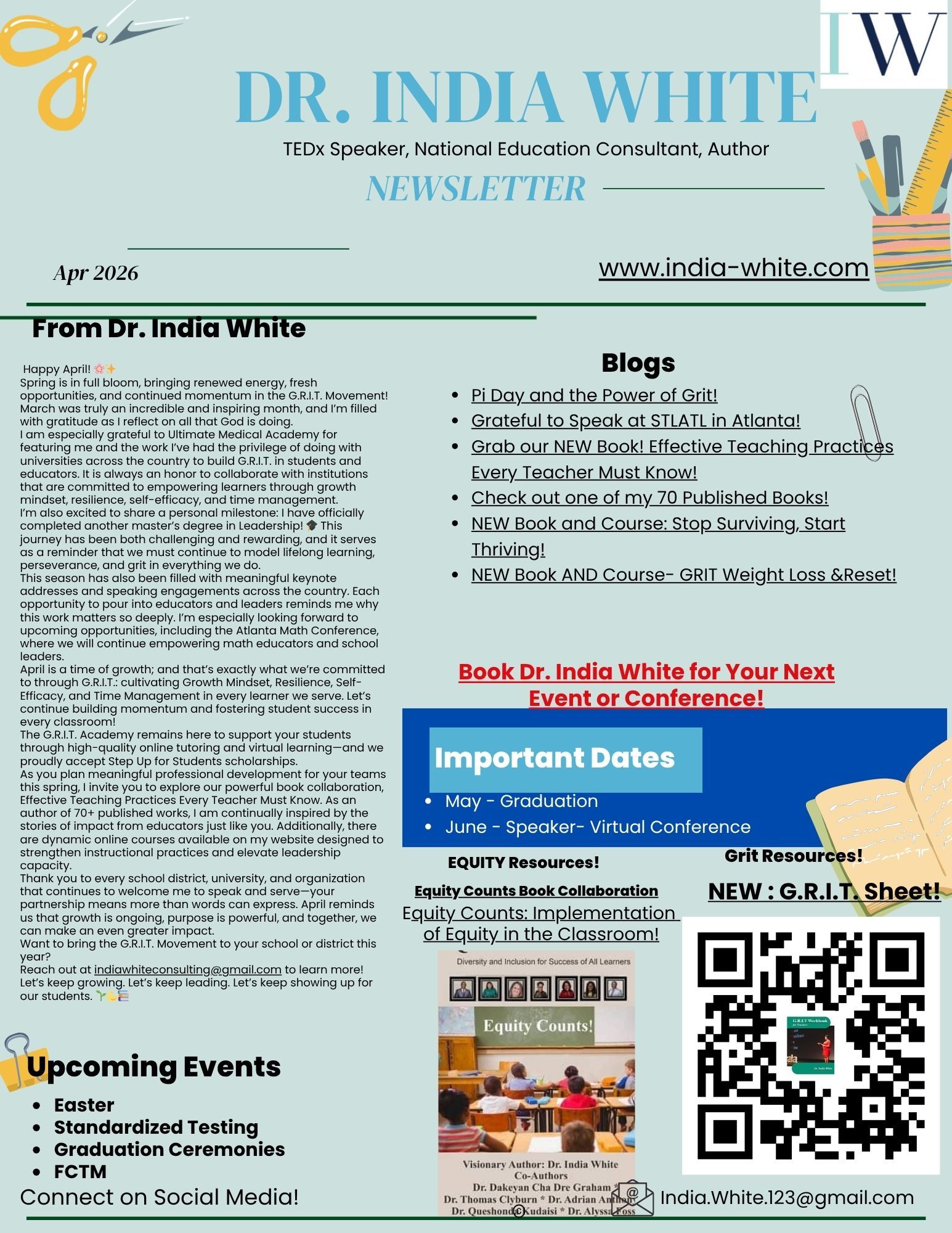
🌸✨ Happy April, G.R.I.T. Family! ✨🌸 I’m so excited to share that my April Newsletter is officially LIVE! 🙌🏽📬 This month is filled with growth, gratitude, and powerful momentum, and I couldn’t wait to bring you along on the journey! 💫 🎉 Inside this month’s newsletter: ✨ A special feature with Ultimate Medical Academy and the impactful work we’re doing with universities to build G.R.I.T. in students and leaders 🎓 Celebrating a personal milestone; I’ve completed my Master’s in Christian Leadership! 🎤 Speaking engagements (including the Atlanta Math Conference 👀) 📚 Ways we’re continuing to support students and educators through the G.R.I.T. Framework This season is all about growth, purpose, and impact—and I’m more energized than ever to continue leading leaders nationwide and building strong character through G.R.I.T. 💪🏽🌱 💼 Let’s Partner! I’m currently booking: 🎤 Speaking engagements 📚 G.R.I.T. Academy tutoring 🎯 Consulting services for schools, districts, and universities If you’re ready to bring the G.R.I.T. Movement to your organization, let’s connect! 📩 indiawhiteconsulting@gmail.com Let’s keep growing. Let’s keep leading. Let’s stay G.R.I.T.T.Y.! 💥🔥📚 hashtag#DrIndiaWhite hashtag#GRITMovement hashtag#Leadership hashtag#Education hashtag#NewsletterLaunch hashtag#GrowthMindset hashtag#Resilience hashtag#ChristianLeadership hashtag#LetsGetGritty hashtag#nctm hashtag#ncsm hashtag#bwxme hashtag#n
🎓 A New Chapter: Leading with G.R.I.T. and Purpose I am beyond excited and deeply grateful to share that I have officially completed my Master’s degree in Christian Leadership! 🙌🏽✨ This journey has been one of faith, discipline, sacrifice, and perseverance. There were moments that stretched me, challenged me, and pushed me to grow in ways I never imagined—but through it all, God remained faithful. This accomplishment is not just a degree; it is a testament to the power of G.R.I.T.—Growth Mindset, Resilience, Self-Efficacy, and Time Management—in action. 🌱 A Calling Greater Than a Credential Earning this degree represents more than academic success—it reflects a deeper calling to lead with integrity, serve with humility, and pour into others with purpose. Christian leadership is about influence, impact, and obedience to God’s direction. I am excited to continue equipping and empowering leaders nationwide to build strong character, develop resilience, and walk boldly in their purpose. Through the G.R.I.T. framework, I remain committed to helping educators, students, and leaders not only succeed academically or professionally—but thrive in every area of their lives. 💛 A Heart of Gratitude I would not be here without the incredible support system God placed around me. To the leaders and professors at my university—thank you for your guidance, wisdom, and commitment to developing leaders who serve with excellence and faith. Your investment has made a lasting impact on my journey. To my family—thank you for your unwavering love, encouragement, and sacrifices. You have been my strength during long nights, busy seasons, and moments when I needed an extra push to keep going. To my church family—thank you for your prayers, covering, and spiritual support. Your encouragement has uplifted me more than words can express, and I am grateful to be surrounded by a community that believes in purpose and calling. 🚀 Moving Forward with Purpose As I step into this new season, I am more energized than ever to continue the work of building leaders who are grounded in faith and strengthened by G.R.I.T. The mission continues—to inspire growth, cultivate resilience, develop confident leaders, and steward time with intention. This is just the beginning. Let’s keep building. Let’s keep growing. Let’s keep leading with purpose. With gratitude and excitement, Dr. India White 🌟

Pi Day and the Power of G.R.I.T. in Mathematics Why March 14 is More Than Just a Math Celebration Every year on March 14 (3/14), mathematicians, teachers, and students around the world celebrate Pi Day—a day dedicated to the mathematical constant π (pi). While Pi Day is often filled with pie-themed treats, math games, and creative activities, it also offers a powerful opportunity to help students develop something even more important than memorizing digits of π. It offers a chance to build G.R.I.T. As I often share in my work with educators and students, G.R.I.T. stands for Great Resilience in Time and is built on four pillars: * Growth Mindset * Resilience * Self-Efficacy * Time Management Mathematics is one of the most powerful subjects for cultivating these traits, and Pi Day gives us a fun and meaningful entry point. nderstanding π: A Lesson in Persistence At its core, π (pi) represents the relationship between a circle’s circumference and its diameter. Pi = Circumference/Diameter This constant is approximately 3.14, but mathematicians have calculated trillions of digits beyond the decimal. Think about that for a moment. The digits of π never repeat and never end. Mathematicians throughout history have spent centuries trying to calculate it more accurately. That alone is a lesson in grit. Mathematics often requires patience, perseverance, and the willingness to keep going—even when answers are not immediately obvious. How Pi Day Builds the G.R.I.T. Framework 1. Growth Mindset: Math Is About Learning, Not Perfection Pi Day reminds students that mathematics is not about getting everything right the first time. When students explore circles, approximate π, or investigate how it works, they begin to realize that mistakes are part of discovery. Encouraging students to say: ✨ “I don’t understand this yet.” instead of ❌ “I’m bad at math.” helps shift their mindset toward growth. A growth mindset allows students to embrace mathematical challenges rather than avoid them. 2. Resilience: Productive Struggle Matters One of the most important lessons students learn through mathematics is that struggle is part of the process. When students measure circular objects in the classroom and calculate approximate values for π, they may initially get inconsistent results. Instead of giving up, they must adjust their measurements and try again. This is where resilience grows. In a G.R.I.T. classroom, we remind students: 📌Every mathematician has struggled before discovering something meaningful. Pi itself was not discovered overnight—it took centuries of investigation. 3. Self-Efficacy: Building Confidence Through Exploration Self-efficacy is the belief that “I can do this.” Pi Day activities help students develop that confidence because they experience mathematics in a hands-on, engaging way . Examples include: 🥧 Measuring pies or circular objects 📏 Finding circumference and diameter 🧠 Memorizing digits of π 🎲 Playing Pi-related math games When students successfully apply math concepts in fun ways, they begin to see themselves as capable mathematicians. This belief is critical for long-term success in STEM fields. 4. Time Management: Breaking Big Problems into Steps Another key component of the G.R.I.T. Framework is time management. Mathematics often requires solving complex problems step by step. Pi Day activities can model this by showing students how mathematicians approach difficult problems. For example, students might: 1️⃣ Measure a circle 2️⃣ Record circumference 3️⃣ Measure diameter 4️⃣ Calculate the ratio Breaking the task into manageable steps teaches students that big problems become solvable when approached strategically. Pi Day Is More Than Pie While Pi Day often includes fun traditions like eating pie or reciting digits of π, its deeper value lies in the mindset it cultivates. Mathematics teaches students that: ✔ Learning takes time ✔ Persistence leads to discovery ✔ Mistakes are part of the process ✔ Confidence grows through practice These lessons extend far beyond the math classroom. They prepare students for life. Final Thoughts: Let’s Get Gritty With Math As educators, parents, and leaders, we must remember that mathematics is not just about numbers—it is about developing thinkers, problem solvers, and resilient learners. Pi Day provides the perfect opportunity to celebrate both mathematics and perseverance. When students experience math through the lens of the G.R.I.T. Framework, they begin to understand that success is not about immediate answers. It is about Great Resilience in Time. So this Pi Day, enjoy a slice of pie—but more importantly, encourage students to stay gritty, keep exploring, and never stop learning. Happy Pi Day! ✍🏽 Dr. India White TEDx Speaker | National Education Consultant Creator of the G.R.I.T. Framework (Great Resilience in Time) Empowering educators and students to thrive through perseverance in mathematics. Visit www.india-white.com/books to grab a copy of your Grit Workbook for Teachers!
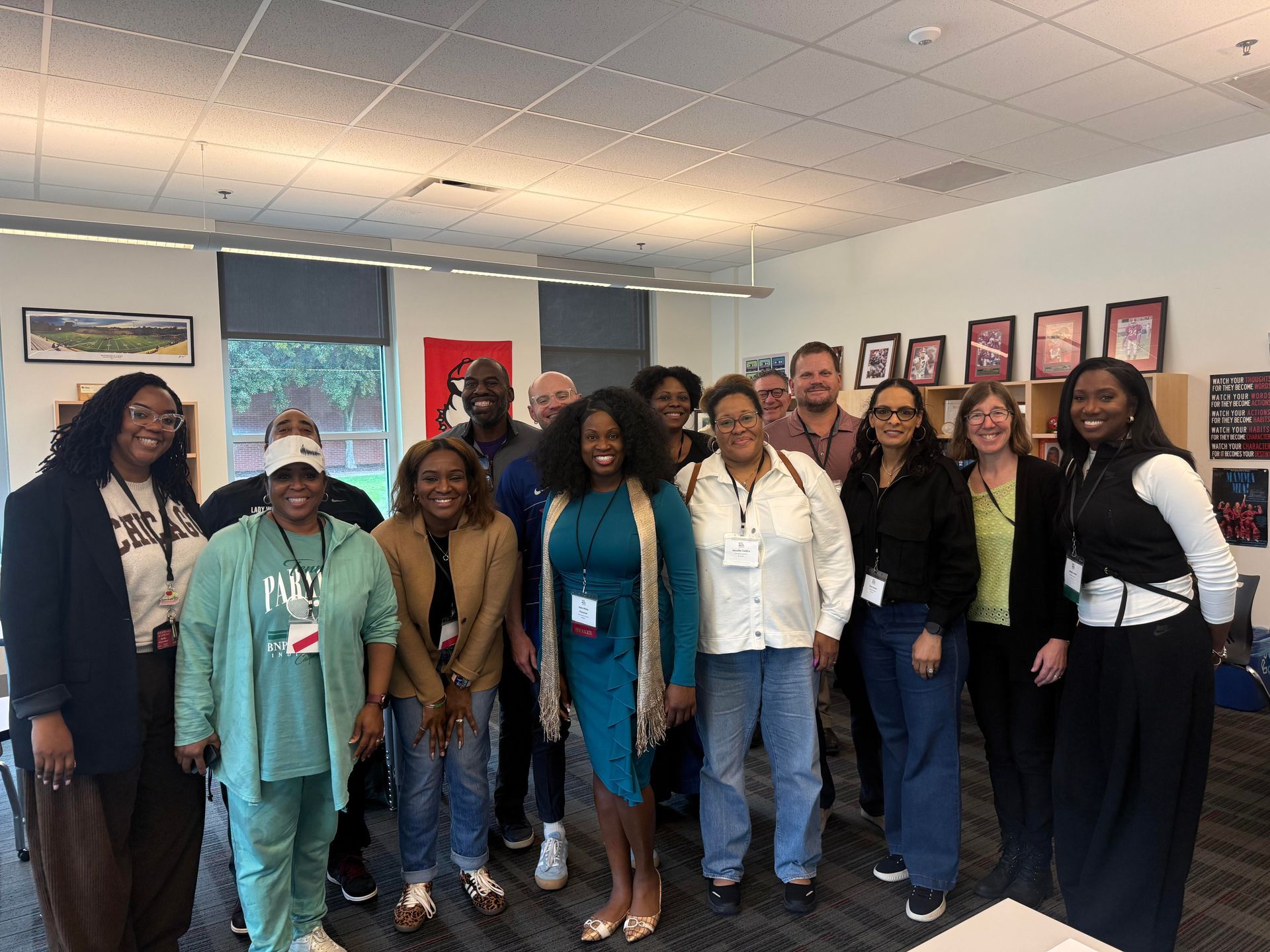
Build Grit Session at the STLATL Gathering: Empowering K–12 Educators in Atlanta Last week in Atlanta, I had the opportunity to facilitate a BuildG Grit session during the STLATL gathering for K–12 educators. The room was filled with teachers, instructional leaders, and school innovators who share a common goal: helping students develop the inner tools they need to succeed—not just academically, but in life. The session focused on a powerful framework built around four essential elements: growth mindset, resilience, self-efficacy, and time management. Together, these pillars form the foundation of what we call “grit moves”—practical shifts in mindset and behavior that help both educators and students push through challenges and stay focused on long-term goals. A Framework for Grit in the Classroom The grit framework begins with growth mindset—the belief that abilities and intelligence can be developed through effort, learning, and persistence. Classrooms that celebrate progress over perfection encourage students to take risks, embrace challenges, and view mistakes as opportunities to grow. Next, we explored resilience. Teaching resilience means helping students learn how to recover from setbacks and keep moving forward. In a world where students face academic pressure, social challenges, and uncertainty, resilience becomes a critical life skill. When struggle is normalized in the classroom, students begin to see challenges as part of the learning process rather than barriers to success. The third pillar, self-efficacy, focuses on students’ belief in their ability to succeed. When students believe they can accomplish a task, they are far more likely to engage deeply and persist through obstacles. Strategies such as setting achievable milestones, providing meaningful feedback, and highlighting student progress help strengthen this belief. Finally, we explored time management, a skill that often determines whether students can translate motivation into meaningful progress. Effective time management empowers students to plan, prioritize, and stay organized, turning big goals into manageable steps. Teachers Ready to Make Grit Moves What made the STLATL session especially energizing was the enthusiasm from the educators in the room. Teachers were not just listening—they were actively brainstorming ways to integrate grit-building strategies into their classrooms. Participants shared ideas about how to embed “grit moves” into daily routines: reflective goal-setting with students, modeling productive struggle, celebrating persistence, and helping students track their growth over time. The conversation quickly shifted from theory to action. Teachers discussed how these strategies could reshape classroom culture—moving away from fear of failure and toward a learning environment grounded in persistence, reflection, and continuous growth. Building Grit Together The energy in the room was a powerful reminder that grit is not something students develop alone. It grows in environments where educators intentionally cultivate perseverance, confidence, and purposeful habits. By focusing on growth mindset, resilience, self-efficacy, and time management, educators can help students build the skills needed to navigate challenges both inside and outside the classroom. As the session wrapped up, one thing was clear: the educators in Atlanta are ready to make grit moves. And when teachers commit to building grit in their classrooms, they are not just preparing students for the next test—they are preparing them for life.
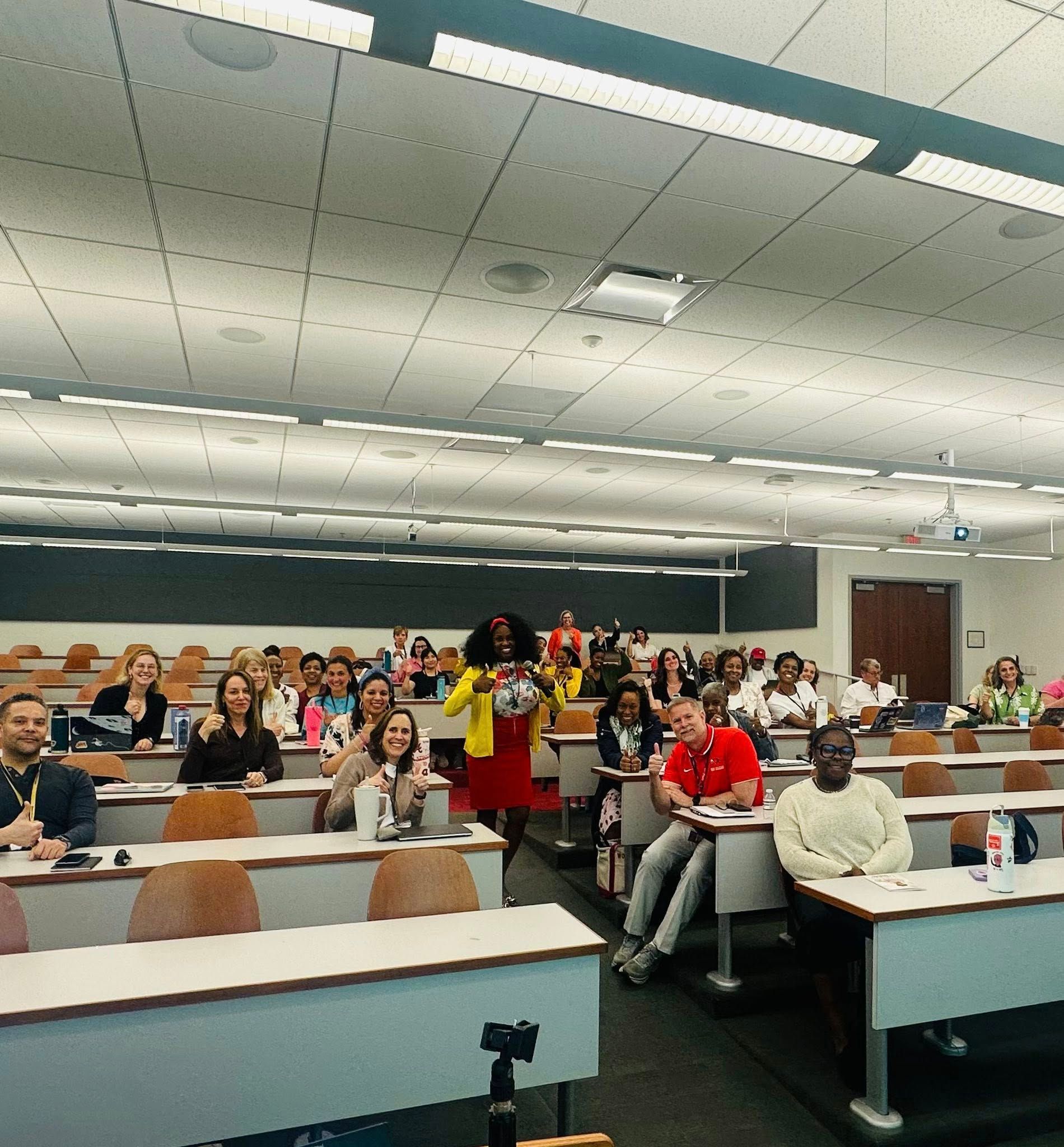
🌟✨ Just wrapped up Session 1 of the #STLATL Conference and it was AMAZING! 🎉💪 We were building grit alongside incredible teachers from Georgia, Kansas, Florida, and beyond! 🌍❤️ So grateful for the opportunity to speak and share gritty solutions that work in ALL classrooms! 🏫🙌 Let’s keep the momentum going and empower our students together! 💥💡 #drindiawhite #education #students #teachers #nctm #ncsm #nabse #bwxme #grit #math #EducationInnovation #TeacherPower #BuildingGrit #achievementgap #tedx #gritframework #WoodwardAcademy