The Power of Grit and Mentoring

India White • October 24, 2025

The Power of Grit and Mentoring
# The Power of Grit in Mentoring: A Leader’s Playbook for Building Perseverance, Confidence, and Achievement

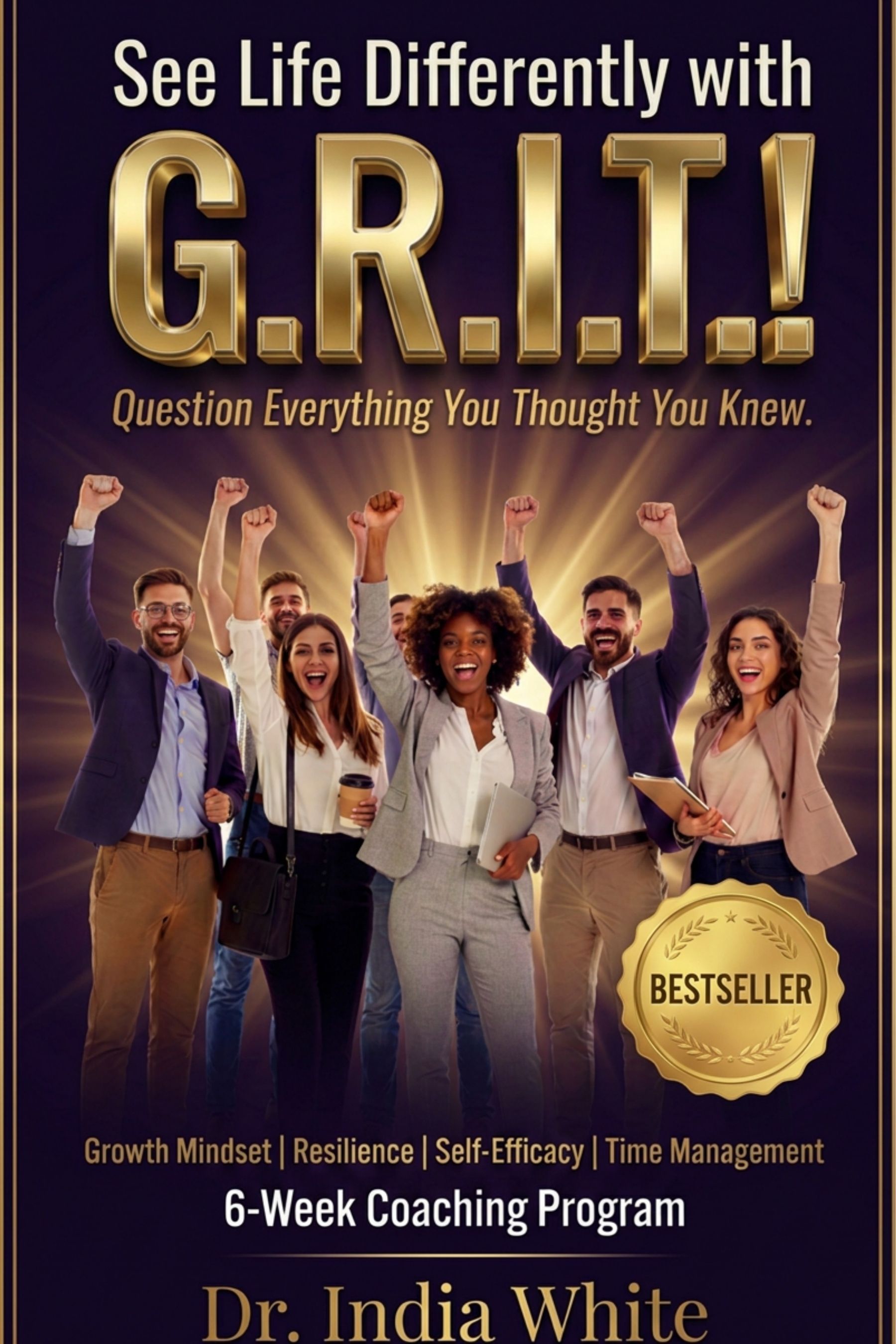
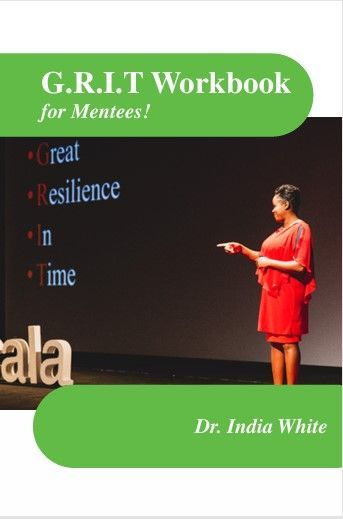
Mentoring changes lives when it moves beyond encouragement and becomes a disciplined, relationship-centered system for **building grit**—the daily habits of perseverance that help mentees finish what they start, grow through setbacks, and become resilient, self-directed learners. In my **G.R.I.T. Framework**—**Growth Mindset, Resilience, Self-Efficacy, and Time Management**—mentors learn to coach behaviors and beliefs that compound over time. This blog synthesizes what research says about grit and mentoring, translates those findings into practical tools for mentors, and shows leaders how to implement a high-fidelity mentoring model in schools, districts, churches, nonprofits, and teams. It also points to resources in my **GRIT Workbooks** and **GRIT Trainings**, and it connects with principles from my **TEDx talk, “The Power of Grit.”**

Leaders: share this with your mentor corps. Every section below includes specific actions and measurable indicators you can put to work right away.

---

## Why Grit Matters in Mentoring (What the Evidence Actually Shows)

Across multiple contexts, grit—defined as “perseverance and passion for long-term goals”—predicts meaningful differences in success. In seminal studies, grit accounted for about **4% of the variance** in outcomes such as Ivy League GPA, **West Point** retention, educational attainment, and **National Spelling Bee** rankings (Duckworth 2007). Importantly, follow-up research at West Point shows that **both** initial fitness and grit significantly predict **four-year retention** through graduation, underscoring that noncognitive traits and tangible preparation work together (Wetzler et al. 2023).

At the same time, the strongest meta-analysis to date urges nuance: the **perseverance-of-effort** facet (showing up and doing the work) tends to carry more predictive weight than the **consistency-of-interests** facet, and grit overlaps with conscientiousness more than early popular narratives suggested (Credé, Tynan, and Harms 2017). For leaders, the takeaway is practical: coach **repeatable effort routines** and **structured practice**, not slogans.

Grit connects tightly to other malleable drivers. A national, randomized study of U.S. high schools found a brief **growth-mindset** intervention improved grades **for lower-achieving students** and increased enrollment in advanced math, **when schools provided supportive contexts**—clear work routines, challenge with care, and timely feedback (Yeager et al. 2019). A meta-analysis on mindsets also concluded that average effects are **small overall** but stronger for at-risk learners and when paired with concrete supports (Sisk et al. 2018). This is a crucial design lesson for mentoring: pair belief-shifts with **structure**.

Two more pillars round out the picture. **Self-efficacy**—students’ belief in their ability to execute tasks—shows **robust, positive relations** with academic performance and persistence across decades of research (Multon, Brown, and Lent 1991; Artino 2012). And **time management** routines reliably improve engagement, reduce stress, and relate to performance, especially when defined as **specific planning behaviors** (Aeon and Aguinis 2017; Aeon, Faber, and Panaccio 2021). Newer work continues to link time-planning habits to higher study engagement via improved self-control and reduced distraction (Fu et al. 2025).

Finally, **mentoring itself works**—and works best when it follows evidence-based practices. Meta-analyses show **modest average effects overall**, with **larger effects** when programs build high-quality relationships, set clear goals, and use structured activities (DuBois et al. 2011; Eby et al. 2008; Raposa et al. 2019). For leaders, that means your implementation fidelity—not just your enthusiasm—determines your impact.

---

## The G.R.I.T. Framework for Mentors (What to Coach and How)

**Growth Mindset.** Mentors help mentees interpret effort and struggle as **signals for strategy change**, not signs of incapacity. Replace “I’m not good at this” with “I’m not there **yet**—what’s my next step?” Pair language with specific practice plans, because mindset effects scale **when** learners get structured opportunities to practice and see improvement (Sisk et al. 2018; Yeager et al. 2019). Three to four sentences of encouragement cannot substitute for a calendar of deliberate work.

**Resilience.** Reframe setbacks using a two-question reset: **What did I try? What will I try next?** Evidence from competitive contexts shows that gritty performers invest in **deliberate practice**—effortful, targeted repetitions with feedback—even when it’s not enjoyable. In the National Spelling Bee, deliberate solo practice predicted performance better than quizzing or leisure reading, and time in deliberate practice **mediated** the link between grit and outcomes (Duckworth et al. 2010/2011). Mentors should therefore normalize “productive discomfort” and monitor the **dose** of high-quality practice.

**Self-Efficacy.** Confidence grows through **mastery experiences**—visible progress on tasks. Mentors should break complex goals into **manageable skills**, track micro-wins, and spotlight progress evidence (“You solved 6/10 correctly last week and 8/10 today after switching strategies”). This is the mechanism by which efficacy fuels persistence and performance (Multon, Brown, and Lent 1991; Artino 2012).

**Time Management.** Grit needs a calendar. Adopt a weekly rhythm: two to three **30-minute focus blocks**, a **review/reflect** block, and **micro-deadlines**. The literature shows that when “time management” is treated as specific planning behaviors—rather than a vague trait—benefits are clearer for well-being, engagement, and performance (Aeon and Aguinis 2017; Aeon, Faber, and Panaccio 2021; Fu et al. 2025).

---

## A Six-Step Mentoring Playbook (Leader-Ready and Measurable)

**Step 1 — Define one outcome and two behaviors.**
Clarify a concrete goal (e.g., “Raise Algebra quiz average from 68% to 78% in four weeks”) and two behaviors that produce it (“Complete three targeted practice sets per week; attend one help session”). Clarity fuels efficacy and execution (Multon, Brown, and Lent 1991).

**Step 2 — Build a weekly plan.**
Schedule **two focused blocks** and one **review block** on the mentee’s calendar. Treat practice like a rehearsal—non-negotiable and protected. Research suggests that structured planning is the tractable unit of “time management” that mentors can coach consistently (Aeon and Aguinis 2017; Aeon, Faber, and Panaccio 2021).

**Step 3 — Practice deliberately.**
Use **model → guided reps → independent reps** with tight feedback loops. Keep challenge just above current skill. In high-stakes learning, deliberate practice—not generic repetition—drives the gains that gritty students realize (Duckworth et al. 2010/2011).

**Step 4 — Track micro-wins.**
Use a single-page tracker: attempts, errors spotted, fixes tried, score trend. Visible progress is the fuel for self-efficacy, and self-efficacy, in turn, sustains persistence (Multon, Brown, and Lent 1991; Artino 2012).

**Step 5 — Debrief with AAA: Acknowledge, Analyze, Adjust.**
Affirm effort (“You protected your study blocks”), analyze strategy (“What worked?”), then adjust (“Next week: swap one 30-minute block to mornings”). This keeps the relationship warm and the expectations high—two hallmarks of effective mentoring programs (DuBois et al. 2011; Raposa et al. 2019).

**Step 6 — Protect the relationship.**
Set predictable check-ins and open with a brief relational scan (“High/Low of the week?”). Meta-analytic reviews show that relationship quality magnifies mentoring effects across domains (Eby et al. 2008; Raposa et al. 2019). Leaders should train mentors to balance **care** with **challenge** every week.

---

## Field-Tested Tips Mentors Can Use Tomorrow

**Make struggle normal and specific.** Say: *“This is hard because you’re learning. Let’s try a smaller step and track it.”* Then define the step and where it goes on the calendar. This converts a mindset cue into a behavior (Sisk et al. 2018; Yeager et al. 2019).

**Coach the dose of practice.** Ask: *“Show me 20 minutes of deliberate reps on the three hardest problem types, then text me your tracker.”* In competitive settings, deliberate practice time is the pathway through which grit shows its effect (Duckworth et al. 2010/2011).

**Anchor confidence in evidence.** Prompt: *“Identify one place you improved since last week, and what you changed to get there.”* Efficacy grows when improvement is linked to controllable strategies (Multon, Brown, and Lent 1991; Artino 2012).

**Keep time visible.** Mentor: *“Open your planner—where are the two 30-minute blocks this week?”* Mentoring that operationalizes time as scheduled behaviors produces more reliable gains (Aeon and Aguinis 2017; Aeon, Faber, and Panaccio 2021; Fu et al. 2025).

---

## Measuring Impact (So Leaders Can See What’s Working)

Build a simple dashboard that blends **outcomes**, **process**, and **beliefs**:

* **Outcome metrics:** course grades, attendance, certification steps completed, or project milestones.
* **Process metrics:** number of focused study blocks completed; number of deliberate-practice reps; number of mentor feedback cycles per week.
* **Belief metrics:** 4-item pulse on growth mindset and self-efficacy (e.g., “I can improve with practice; I know my next step”).

Track weekly. Coach **behavioral fidelity** first (Did we do the blocks? the reps? the debriefs?) before adjusting goals. This mirrors what high-impact mentoring programs do at scale—focus on the controllables, then iterate (DuBois et al. 2011; Raposa et al. 2019; Eby et al. 2008).

---

## Implementation Pitfalls Leaders Should Avoid (And What to Do Instead)

**Pitfall 1: “Mindset talk” without practice plans.**
**Fix:** Pair every encouragement with a **specific, scheduled action**. The strongest studies show mindset affects achievement most when aligned with structure and supportive contexts (Yeager et al. 2019; Sisk et al. 2018).

**Pitfall 2: Treating grit as personality, not practice.**
**Fix:** Emphasize the **perseverance-of-effort** behaviors. Remember that grit overlaps with conscientiousness and works mainly through consistent, high-quality effort (Credé, Tynan, and Harms 2017).

**Pitfall 3: Vague time-management advice.**
**Fix:** Define time management as **two to three protected blocks + one review block + micro-deadlines**. Contemporary reviews favor concrete planning over broad platitudes (Aeon and Aguinis 2017; Aeon, Faber, and Panaccio 2021; Fu et al. 2025).

**Pitfall 4: Relationship drift.**
**Fix:** Train mentors to open with connection, close with commitments, and log each session. Meta-analyses consistently link **relationship quality** to larger effects (Raposa et al. 2019; Eby et al. 2008).

---

## How the GRIT Workbooks and Trainings Support Your Mentoring Program

My **GRIT Workbooks** (Students, Educators, and Clergy) provide ready-to-use trackers, reflection prompts, mentor scripts, and weekly planning pages aligned with the **G.R.I.T. Framework**. The tools are designed so mentors can implement the **six-step playbook** immediately and leaders can monitor fidelity with simple checklists. In **GRIT Trainings**, teams practice coaching micro-skills (e.g., moving from praise to evidence-based efficacy), calibrate deliberate-practice tasks in core subjects, and learn to set up dashboards that blend outcomes, process, and belief metrics. I also integrate key moments from my **TEDx talk “The Power of Grit,”** tailoring examples for schools, districts, youth ministries, and community organizations. For details, **visit my website** to explore coaching, keynotes, and full implementation support.

---

## A Final Charge to Leaders

Grit is not a slogan; it is a **system**—of beliefs, behaviors, and relationships, repeated weekly, measured carefully, and refined relentlessly. When mentors coach **Growth Mindset** with structure, build **Resilience** through deliberate practice, cultivate **Self-Efficacy** with visible mastery, and protect **Time** on the calendar, mentees don’t merely cope—they **excel**. The research is clear that effects are **real but modest** on average; the magic happens when leaders insist on fidelity to **high-quality routines** and **caring, high-expectations relationships**. Equip your mentors with the GRIT playbook, and watch perseverance, confidence, and achievement rise—one well-planned week at a time.

If you want a plug-and-play mentor toolkit, a GRIT keynote, or a customized training and evaluation plan for your organization, reach out. I’d be honored to help your mentors—and mentees—grow strong, finish well, and shine.

---

## References (Chicago Author–Date)

Aeon, Brad, and Herman Aguinis. 2017. “It’s About Time: New Perspectives and Insights on Time Management.” *Academy of Management Perspectives* 31 (4): 309–30. [https://doi.org/10.5465/amp.2016.0166](https://doi.org/10.5465/amp.2016.0166). ([Academy of Management Journals][1])

Aeon, Brad, Thomas Faber, and Alexander Panaccio. 2021. “Does Time Management Work? A Meta-Analysis.” *PLOS ONE* 16 (1): e0245066. [https://doi.org/10.1371/journal.pone.0245066](https://doi.org/10.1371/journal.pone.0245066). ([PLOS][2])

Artino, Anthony R., Jr. 2012. “Academic Self-Efficacy: From Educational Theory to Instructional Practice.” *Perspectives on Medical Education* 1 (2): 76–85. [https://doi.org/10.1007/s40037-012-0012-5](https://doi.org/10.1007/s40037-012-0012-5). ([PubMed Central][3])

Credé, Marcus, Michael C. Tynan, and Peter D. Harms. 2017. “Much Ado about Grit: A Meta-Analytic Synthesis of the Grit Literature.” *Journal of Personality and Social Psychology* 113 (3): 492–511. [https://pubmed.ncbi.nlm.nih.gov/27845531/](https://pubmed.ncbi.nlm.nih.gov/27845531/). ([PubMed][4])

DuBois, David L., Nelson Portillo, Jean E. Rhodes, Naida Silverthorn, and Jeffrey C. Valentine. 2011. “How Effective Are Mentoring Programs for Youth? A Systematic Assessment of the Evidence.” *Psychological Science in the Public Interest* 12 (2): 57–91. [https://doi.org/10.1177/1529100611414806](https://doi.org/10.1177/1529100611414806). ([PubMed][5])

Duckworth, Angela L. 2007. “Grit: Perseverance and Passion for Long-Term Goals.” *Journal of Personality and Social Psychology* 92 (6): 1087–1101. [https://pubmed.ncbi.nlm.nih.gov/17547490/](https://pubmed.ncbi.nlm.nih.gov/17547490/). ([PubMed][6])

Duckworth, Angela L., Teri A. Kirby, Eli Tsukayama, Heather Berstein, and K. Anders Ericsson. 2011. “Deliberate Practice Spells Success: Why Grittier Competitors Triumph at the National Spelling Bee.” *Social Psychological and Personality Science* 2 (2): 174–81. [https://doi.org/10.1177/1948550610385872](https://doi.org/10.1177/1948550610385872). ([SAGE Journals][7])

Eby, Lillian T., Tammy D. Allen, Sarah C. Evans, Thomas Ng, and David L. DuBois. 2008. “Does Mentoring Matter? A Multidisciplinary Meta-Analysis Comparing Mentored and Non-Mentored Individuals.” *Journal of Vocational Behavior* 72 (2): 254–67. [https://pmc.ncbi.nlm.nih.gov/articles/PMC2352144/](https://pmc.ncbi.nlm.nih.gov/articles/PMC2352144/). ([PubMed Central][8])

Fu, Yilin, Jiahui Yu, and Shuqin Li. 2025. “Unlocking Academic Success: The Impact of Time Management on College Students’ Study Engagement.” *BMC Psychology* 13 (1): 258. [https://pmc.ncbi.nlm.nih.gov/articles/PMC11967054/](https://pmc.ncbi.nlm.nih.gov/articles/PMC11967054/). ([PubMed Central][9])

Multon, Karen D., Steven D. Brown, and Robert W. Lent. 1991. “Relation of Self-Efficacy Beliefs to Academic Outcomes: A Meta-Analytic Investigation.” *Journal of Counseling Psychology* 38 (1): 30–38. [https://eric.ed.gov/?id=EJ426706](https://eric.ed.gov/?id=EJ426706). ([ERIC][10])

Raposa, Elizabeth B., Jean E. Rhodes, Sarah B. Stams, R. Schwartz, Carla Cardoso, et al. 2019. “The Effects of Youth Mentoring Programs: A Meta-Analysis of Outcome Studies.” *Journal of Youth and Adolescence* 48: 423–43. [https://www.rhodeslab.org/wp-content/uploads/2019/01/Raposa2019_Article_TheEffectsOfYouthMentoringProg.pdf](https://www.rhodeslab.org/wp-content/uploads/2019/01/Raposa2019_Article_TheEffectsOfYouthMentoringProg.pdf). ([rhodeslab.org][11])

Sisk, Victoria F., Alexander P. Burgoyne, Jingze Sun, Jennifer L. Butler, and Brooke N. Macnamara. 2018. “To What Extent and Under Which Circumstances Are Growth Mind-Set Interventions Effective? A Meta-Analysis of the Evidence.” *Psychological Science* 29 (4): 549–71. [https://journals.sagepub.com/doi/10.1177/0956797617739704](https://journals.sagepub.com/doi/10.1177/0956797617739704). ([SAGE Journals][12])

Wetzler, Elisheva L., Max Karstoft, John J. Ratey, Michael J. Matthews, and Yuval Neria. 2023. “Grit and Uncertainty: Grit Predicts Performance and West Point Graduation.” *Scientific Reports* 13: 11707. [https://pmc.ncbi.nlm.nih.gov/articles/PMC11407409/](https://pmc.ncbi.nlm.nih.gov/articles/PMC11407409/). ([PubMed Central][13])

Yeager, David S., Paul Hanselman, Gregory M. Walton, Jared S. Murray, Robert Crosnoe, et al. 2019. “A National Experiment Reveals Where a Growth Mindset Improves Achievement.” *Nature* 573 (7774): 364–69. [https://www.nature.com/articles/s41586-019-1466-y](https://www.nature.com/articles/s41586-019-1466-y). ([Nature][14])

---

*If you’d like this blog converted into a branded PDF, a leader’s one-pager, or a mentor session script packet aligned to the GRIT Workbooks (with trackers, planning pages, and fidelity checklists), say the word and I’ll package it for immediate use.*

[1]: https://journals.aom.org/doi/10.5465/amp.2016.0166?utm_source=chatgpt.com "It's About Time: New Perspectives and Insights on ..."
[2]: https://journals.plos.org/plosone/article?id=10.1371%2Fjournal.pone.0245066&utm_source=chatgpt.com "Does time management work? A meta-analysis | PLOS One"
[3]: https://pmc.ncbi.nlm.nih.gov/articles/PMC3540350/?utm_source=chatgpt.com "Academic self-efficacy: from educational theory to instructional ..."
[4]: https://pubmed.ncbi.nlm.nih.gov/27845531/?utm_source=chatgpt.com "Much ado about grit: A meta-analytic synthesis of the grit ..."
[5]: https://pubmed.ncbi.nlm.nih.gov/26167708/?utm_source=chatgpt.com "How Effective Are Mentoring Programs for Youth? A ..."
[6]: https://pubmed.ncbi.nlm.nih.gov/17547490/?utm_source=chatgpt.com "Grit: perseverance and passion for long-term goals"
[7]: https://journals.sagepub.com/doi/10.1177/1948550610385872?utm_source=chatgpt.com "Deliberate Practice Spells Success"
[8]: https://pmc.ncbi.nlm.nih.gov/articles/PMC2352144/?utm_source=chatgpt.com "Does Mentoring Matter? A Multidisciplinary Meta-Analysis ..."
[9]: https://pmc.ncbi.nlm.nih.gov/articles/PMC11967054/?utm_source=chatgpt.com "Unlocking academic success: the impact of time management ..."
[10]: https://eric.ed.gov/?id=EJ426706&utm_source=chatgpt.com "EJ426706 - Relation of Self-Efficacy Beliefs to Academic ..."
[11]: https://www.rhodeslab.org/wp-content/uploads/2019/01/Raposa2019_Article_TheEffectsOfYouthMentoringProg.pdf?utm_source=chatgpt.com "The Effects of Youth Mentoring Programs: A Meta-analysis ..."
[12]: https://journals.sagepub.com/doi/10.1177/0956797617739704?utm_source=chatgpt.com "To What Extent and Under Which Circumstances Are ..."
[13]: https://pmc.ncbi.nlm.nih.gov/articles/PMC11407409/?utm_source=chatgpt.com "Grit and uncertainty: Grit predicts performance and West ..."
[14]: https://www.nature.com/articles/s41586-019-1466-y?utm_source=chatgpt.com "A national experiment reveals where a growth mindset ..."

By India White February 9, 2026
Coming Full Circle: Returning to Sarasota with Gratitude and G.R.I.T. I am filled with gratitude and emotion as I prepare to return to Sarasota; not just as a speaker, but as someone whose life was forever changed by the generosity, vision, and grit of this community. Many years ago, I stood on the other side of opportunity as a formerly homeless teen, supported by scholarships made possible by leaders and organizations—many of whom will be in the room when I return. Those investments were not just financial; they were votes of confidence. They said, “We see you. We believe in your future.” And that belief changed everything. To now come back and say thank you; not in words alone, but through purpose-driven work—is truly humbling. Honoring a Legacy of Advocacy and Impact This moment is especially meaningful as we continue the legacy of Rep. Detert, a tireless advocate for students, education, and formerly homeless youth like myself. Her leadership embodied what it means to pair policy with compassion and action with accountability. She didn’t just talk about equity—she fought for it. That legacy lives on in the leaders, educators, and community members who refuse to let circumstance define a child’s future. The G.R.I.T. of This Organization What stands out most about this organization and its leaders is their impeccable G.R.I.T.**—growth mindset, resilience, self-efficacy, and time invested wisely in people. This is not performative work. This is long-haul, legacy-building leadership. You don’t just open doors—you walk alongside young people until they’re strong enough to run through them. A Personal Thank You Returning to Sarasota is deeply personal. It is a reminder that when communities choose to invest in potential, the ripple effects last generations. I am living proof that grit grows when someone believes in you long enough to help you believe in yourself. Thank you for sowing seeds years ago. Thank you for continuing the work. And thank you for allowing me to return—not just to speak, but to honor a legacy that helped shape my life. This is full circle. And we’re just getting started. ๐Ÿ’™
By India White February 9, 2026
Grit Meets AI: Reflections from the Florida Distance Learning Association Conference This past week, I had the absolute pleasure of presenting at the Florida Distance Learning Association Conference, and I’m still energized by the conversations, questions, and passion I witnessed from professors and K–12 educators across the state and beyond. My session focused on G.R.I.T. and Artificial Intelligence in the math space (Grades K–12); and more importantly, how we can responsibly and intentionally use AI to strengthen learning rather than replace good teaching. G.R.I.T. + AI = Powerful Instruction During the session, I shared how my G.R.I.T. framework, Growth Mindset, Resilience, Self-Efficacy, and Time Management, can serve as a guardrail for AI integration in mathematics. AI is not here to do the thinking for* students; it’s here to help students think better. We explored how AI can: * Support productive struggle rather than shortcut it * Differentiate instruction while maintaining high cognitive demand * Build student confidence through feedback and reflection * Help teachers reclaim time without sacrificing rigor From elementary number sense to secondary algebra and beyond, AI—when paired with grit—becomes a powerful ally in equity-centered math instruction. A Call to Professors and Teachers Whether you teach future educators at the university level or students in a K–12 classroom, my encouragement is this: don’t fear AI—frame it. When grounded in pedagogy, purpose, and perseverance, AI can help us close gaps instead of widening them. If you’re preparing teachers, now is the time to model what ethical, effective, and gritty AI use** looks like in practice. Let’s Stay Connected If this message resonates with you, I invite you to continue the work with me: * ๐Ÿ“˜ Explore my books and G.R.I.T. resources designed for educators and leaders * ๐ŸŽค Book me to speak or lead professional learning for your school, district, or conference * ๐ŸŒ Visit my website for tools, courses, and upcoming events Together, we can ensure that innovation never outpaces intention—and that grit remains at the heart of learning in every classroom, whether in person or online. Let’s get gritty. Let’s get intentional. And let’s lead the future of math education—wisely and boldly. ๐Ÿ’ช๐Ÿ“Š๐Ÿค–
By India White February 6, 2026
Join us at the Let's Get Gritty Podcast with Dr. India White!
By India White February 6, 2026
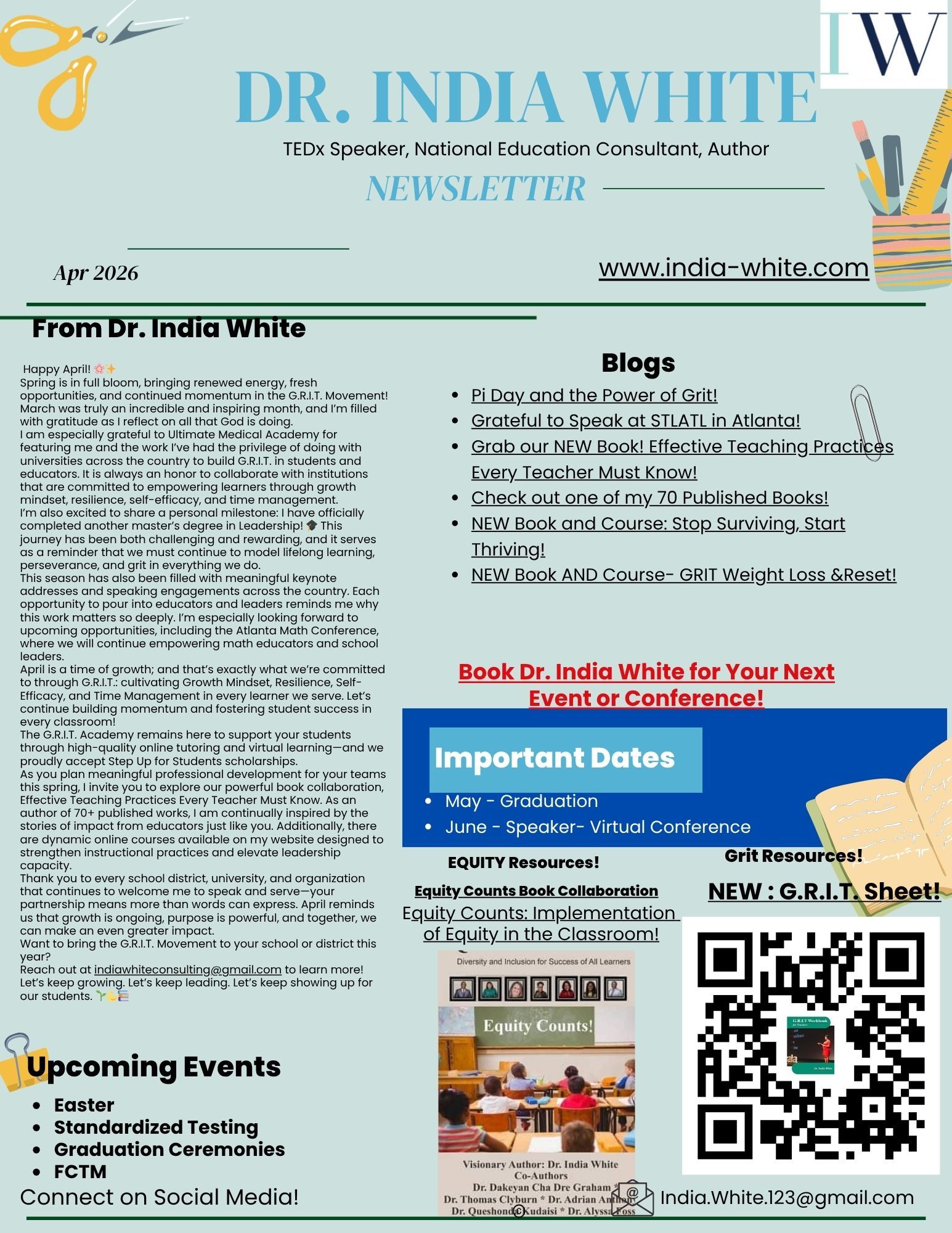
February Energy, Connection, and Celebration—Our Newsletter Is Live! ๐ŸŽ‰ I’m so excited to share our February Newsletter, and whew—what a month it has already been! February has been full of learning, laughter, inspiration, and powerful connections, all while we celebrate Black History Month and continue the work of building equity and excellence in education. One of the biggest highlights this month was presenting aUtah Council of Teachers of Mathematics (UCTM)**. Connecting with educators in person in Utah was such a joy. The energy in the rooms, the thoughtful questions, the shared commitment to students—it reminded me why I love this work so much. Teachers showed up curious, gritty, and ready to grow, and I left feeling deeply encouraged. At the same time, I had the opportunity to connect with educators online through Florida Distance Learning Association (FDLA), and let me tell you—virtual spaces can be just as powerful! Engaging with teachers across distances, sharing ideas, and learning together in real time was an absolute blast. Whether in Utah or online, the common thread was clear: educators are hungry for tools that help students thrive. And February isn’t slowing down yet! I’m counting down the days as I prepare to serve as a keynote speaker for the Junior League of Sarasota at the end of the month. I’m truly honored and excited to share space with leaders who are committed to impact, service, and community transformation. This month’s newsletter captures all of that momentum—where I’ve been, what’s coming next, and how we can stay connected. If you haven’t checked it out yet, I invite you to take a look, share it, and reach out. Let’s collaborate, dream big, and keep building together. February is reminding me that connection fuels purpose—and I’m grateful for every educator, leader, and partner walking this journey with me. Let’s keep celebrating, learning, and getting gritty—together. ๐Ÿ’›โœจ
By India White January 29, 2026
๐ŸŒŸ What an ABSOLUTELY PHENOMENAL time at UCTM presenting on grit games! ๐ŸŽ‰ The educators in Utah are truly AMAZING! I feel so blessed to share insights on grit and connect with new friends—cheering each other on to get pumped up again! ๐Ÿ’ชโœจ Had a hilarious time trying to throw hoops with Dan (I only made ONE shot—let’s just say my accuracy needs some work! ๐Ÿ˜‚๐Ÿ€). It was fantastic to connect with such inspiring friends and leaders in the math community, sharing exciting updates that Savvas has for all the math teachers out there! ๐Ÿ“š๐Ÿ” BIG shoutout to the UCTM board, Jackie, the Savvas team, and all the incredible Utah educators! Thanks for a blast of a time! ๐Ÿš€๐Ÿ™Œ #GritAndGames #UpliftEducators #MathMagic #ConnectAndInspire #SavvasUpdates #FunInEducation โœจโค๏ธ (I don’t own music copyright)
By India White January 28, 2026
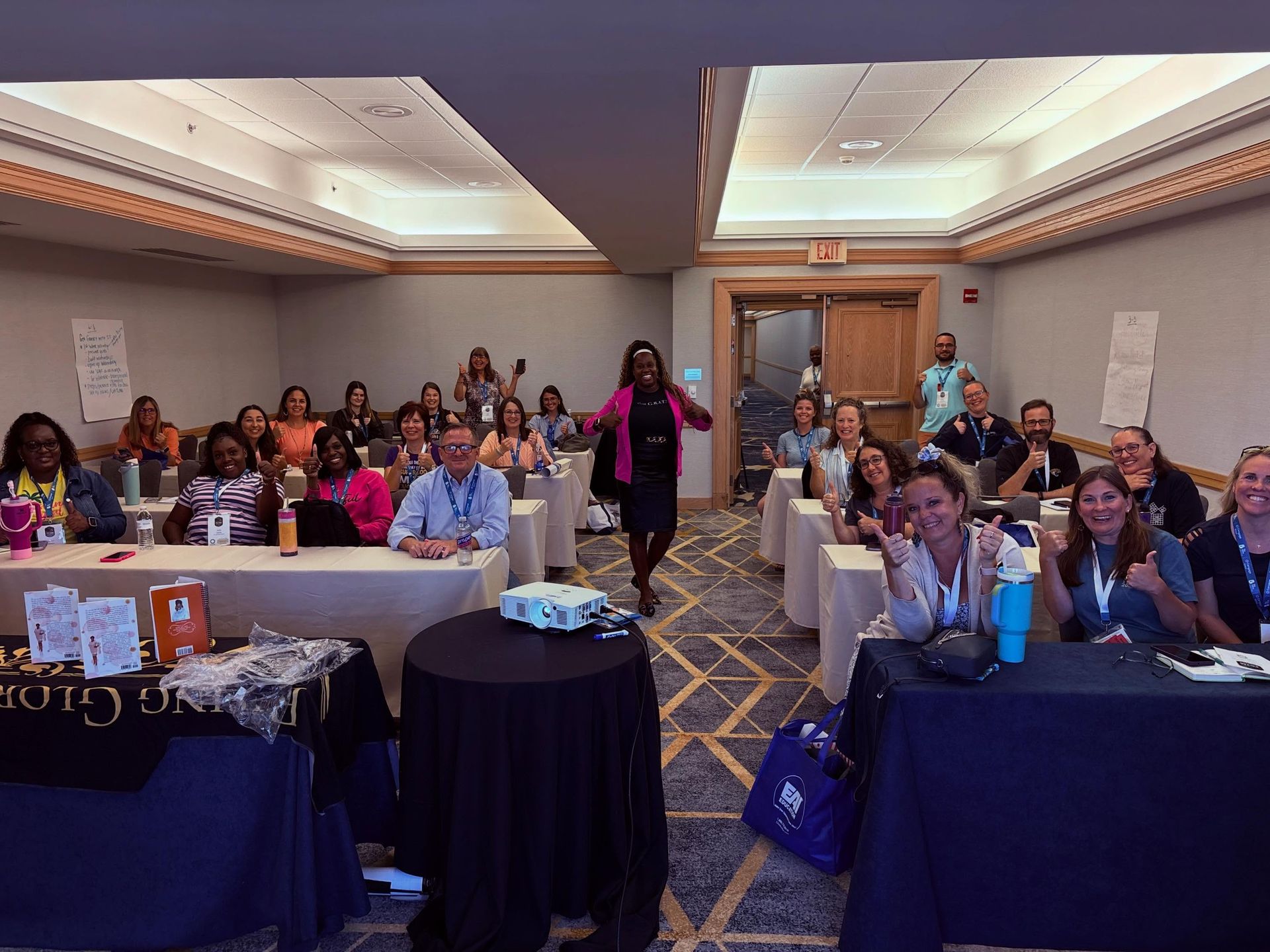
I am incredibly grateful for the opportunity to speak at UCTM 2026. The energy in the rooms was powerful, and several sessions were filled with educators eager to grow, reflect, and strengthen their practice—especially during my session on building gritty thinking in the classroom. Experiences like this remind me why this work matters so deeply. Teachers came ready to engage in meaningful conversations about productive struggle, perseverance, and how to move beyond surface-level engagement into true student thinking. One of the highlights was hearing how excited educators were about the new Savvas math books and the way these resources support conceptual understanding, collaboration, and confidence for learners at all levels. When curriculum, instruction, and mindset align, we truly begin to bridge the gap for students. At the heart of these conversations was the powerful connection between Thinking Classrooms and my G.R.I.T. Framework—Growth Mindset, Resilience, Self-Efficacy, and Time Management. Together, they create learning environments where students don’t just solve problems, they learn how to persist, reflect, and believe in themselves. Building grit starts with a growth mindset. In a thinking classroom, struggle is not a setback—it’s evidence of learning. Teachers can normalize this by celebrating multiple strategies, modeling mistakes, and using language that reframes being “stuck” as part of the thinking process. When students understand that effort and revision are expected, they engage more deeply and take greater ownership of their learning. Resilience grows through collaboration. Thinking classrooms thrive when students work together, share ideas, and wrestle with concepts as a team. Random grouping, structured roles, and intentional math discourse help students learn that perseverance is strengthened in community. When learners support one another, they build confidence and stamina to tackle challenging tasks. Self-efficacy develops when student thinking is valued. Using vertical non-permanent surfaces like whiteboards lowers the fear of making mistakes and encourages risk-taking. Asking students to explain their reasoning and highlighting their ideas—whether complete or still developing—signals that their thinking matters. Over time, students begin to see themselves as capable mathematicians. Time management is another critical component of grit. Teachers can support this by breaking tasks into phases, using visual timers, and guiding students to reflect on how they used their time. These habits help students learn to pace themselves, stay focused, and persist through complex problems—skills that extend far beyond the math classroom. The questions we ask also shape gritty thinking. Instead of rescuing students, we can ask questions that prompt reflection and strategy: What do you already know? What have you tried so far? What could you try next? These questions keep students engaged in the process and strengthen their independence as thinkers. Finally, reflection brings it all together. Ending lessons with opportunities for students to reflect on effort, strategies, and moments of perseverance reinforces that grit is just as important as correctness. When we celebrate persistence as much as achievement, students learn that growth happens over time. UCTM 2026 was a powerful reminder that educators everywhere are committed to creating classrooms where students feel supported, challenged, and empowered. I am grateful for every teacher who showed up ready to learn, collaborate, and push their thinking. Let’s stay gritty, keep learning together, and continue bridging the gap so every learner has the opportunity to thrive.
By India White January 23, 2026
๐ŸŽ‰ Exciting news, teachers! ๐ŸŽ“โœจ I’m gearing up for an amazing trip to UCTM, and I want YOU to join the fun! Don’t forget to check out my latest video where I reveal some fantastic door prizes that could be yours! ๐ŸŽ๐Ÿ™Œ Let’s connect, learn, and make unforgettable memories together. Click the link and find out how you can win! ๐Ÿš€๐Ÿ’ผ ๐Ÿ‘‰โœจ #UCTM2026 #TeachersRock #drindiawhite #nabse @#foryou (I don’t own copyright to music ) Let’s make this an event to remember! ๐Ÿ™๐ŸŽ‰
By India White January 18, 2026
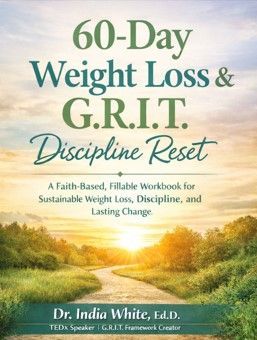
It’s Official! The 60-Day Weight Loss & G.R.I.T. Discipline Reset Has Launched ๐ŸŽ‰ I’m excited to officially announce the launch of my newest transformational experience—the 60-Day Weight Loss & G.R.I.T. Discipline Reset! This course has been thoughtfully designed for individuals who are ready to stop starting over and finally build the discipline, consistency, and mindset needed to see lasting results. Led by Dr. India White, this 8-week online course goes beyond traditional weight loss programs. It focuses on sustainable change through my proven G.R.I.T. Framework: Growth Mindset, Resilience, Self-Efficacy, and Time Management. This isn’t about extremes or quick fixes—it’s about building habits that fit real life and last well beyond 60 days. What’s Included Participants receive access to: * An introductory video to reset your mindset and set clear expectations * Eight weekly modules that build discipline step by step * A conclusion video to help you transition from a reset to a lifestyle Each week is intentionally structured to help you strengthen both your body and mind, so progress doesn’t disappear once motivation fades. Why This Course Works So many weight loss programs focus only on what to eat or how to exercise—but they ignore the mental discipline required to stay consistent. This course fills that gap. You’ll learn how to: * Stay resilient during setbacks * Manage your time realistically * Build confidence through small, sustainable wins * Create routines that work even on busy days To deepen the experience, I highly encourage participants to pair the course with the 60-Day Weight Loss G.R.I.T. Workbook, available on Amazon. The workbook provides daily reflections, habit tracking, and accountability tools that align with each week of the course. Who This Course Is For This course is perfect for: * Individuals ready to lose weight with structure and purpose * Busy professionals, educators, leaders, and entrepreneurs * Fitness trainers and wellness professionals * Anyone seeking discipline, clarity, and long-term results Enroll Today If you’ve been waiting for the right time to recommit to your health, this is it. The 60-Day Weight Loss & G.R.I.T. Discipline Reset course is now live and ready for you. ๐Ÿ‘‰ Click the link to purchase and enroll today ๐Ÿ‘‰ Start your 60-day reset ๐Ÿ‘‰ Build discipline that lasts a lifetime Your healthiest, most disciplined self is within reach—and G.R.I.T. is the bridge to get you there.
January 15, 2026
From Homelessness to Hope: Moving from Surviving to Thriving at Resilient Beyond Measure Serving as a keynote speaker at the Resilient Beyond Measure Conference was not only fun, it was deeply meaningful. The room was filled with leaders, educators, and purpose-driven individuals who were hungry for more—more clarity, more impact, and more hope. That collective energy reminded me why I continue to show up and share my story. During my keynote, I spoke candidly about my journey—one that did not begin on a stage, in a boardroom, or with titles behind my name. I shared how I once experienced homelessness, uncertainty, and moments where survival was the only goal. There were seasons when simply making it through the day felt like the win. Yet, through grit, faith, discipline, and relentless perseverance, that season did not define my destination. Today, by God’s grace and years of intentional work, I now serve as a math textbook author, educator, national speaker, and entrepreneur, helping impact millions of students, teachers, leaders, and organizations across the nation. My story is living proof that where you start does not dictate where you finish. At the heart of my keynote was a bold challenge: we must stop normalizing survival mode. Survival is reactive. Thriving is intentional. I shared my G.R.I.T. framework, which continues to be the foundation of my work and message: Growth Mindset — shifting from “I can’t” to “I’m learning” Resilience — developing the stamina to rise again and again Self-Efficacy — believing deeply that you are capable and equipped Time Management — aligning time with purpose, not pressure When these four pillars work together, individuals don’t just cope—they transform. One of the metaphors that resonated strongly with the audience was the idea that many of us are living and leading in low-level energy spaces, when we were designed for more. I described this as moving from survival-level “beta rays” toward higher levels of clarity and impact. Beta represents survival mode —stress-driven, reactive, exhausted, and constantly responding to emergencies. Alpha reflects stability and focus —calmer thinking, reflection, and clearer decision-making. Theta symbolizes creativity and deep connection —innovation, vision, and problem-solving begin to flourish. Gamma represents peak performance and transformation —high-level thinking, purpose, alignment, impact, and legacy. Thriving means intentionally moving away from beta-level survival and stepping into gamma-level living and leadership—where our actions are aligned with purpose, vision, and long-term impact. I want to extend my sincere thanks to Jackie Walker for the invitation and opportunity to keynote such a powerful conference. Resilient Beyond Measure created a space where authenticity, healing, and growth were not just encouraged—they were activated. It was truly an honor to serve and connect with such an inspiring community. I was also excited to share my newest book, Stop Surviving, Start Thriving, which expands on the message of the keynote and provides practical tools to help readers move from burnout to breakthrough. The book is accompanied by a new course designed to walk participants step by step through applying the G.R.I.T. framework in real life—not just reading about it, but living it. In addition, leaders are invited to explore the G.R.I.T. Workbook for Leaders, created to support sustainable leadership, confidence, resilience, and intentional growth. If this message resonates with you, I would love to stay connected. Visit my website at www.india-white.com to learn more about my work, speaking engagements, and resources. Both Stop Surviving, Start Thriving and the G.R.I.T. Workbook for Leaders are available today! Whether you are an educator, leader, entrepreneur, or someone simply ready for more, remember this: you were never meant to just survive. With grit, vision, and intention, thriving is not only possible—it’s your calling. With gratitude and grit, Dr. India White
By India White January 14, 2026
EXCITING NEWS!! I am thrilled to share some incredible news with you all! After months of hard work and dedication, I am proud to announce the launch of my new book, "Stop Surviving, Start Thriving: A Grit Framework for Leaders." This book is designed to empower leaders like you with the insights and strategies needed to elevate your leadership journey and truly thrive in today’s challenging environment. What You’ll Discover in My Book In "Stop Surviving, Start Thriving," I delve into the grit framework that will help you harness your strengths, overcome obstacles, and lead with confidence. Whether you’re an established leader or someone just starting your journey, this book is filled with practical advice and actionable steps to make a meaningful impact. Why This Book Matters: - Transformational Insights: Learn how to shift your mindset from merely surviving to genuinely thriving in your role. - Practical Strategies: Gain access to tools and techniques that you can implement right away to enhance your leadership effectiveness. - Inspiration: Discover stories and examples that will motivate you to take your leadership to the next level. Introducing the Stop Surviving, Start Thriving Course! In addition to the book, I am thrilled to announce the launch of the Stop Surviving, Start Thriving Course! This course complements the book perfectly, providing you with an interactive experience to dive deeper into the concepts covered and gain practical tools that you can use in your daily leadership practice. What to Expect from the Course: - Interactive Learning: Engaging modules that challenge you to think critically and apply lessons to your leadership style. - Real-Life Applications: Practical exercises and discussions that make the concepts relatable and actionable. - Community Support: Join a network of like-minded individuals who are also on their journey to thrive! Where to Find the Book and Course You can grab your copy of "Stop Surviving, Start Thriving" on Amazon by following this link: Amazon Link ( https://a.co/d/c8BNlS9 ). ๐Ÿ“– For those eager to join the course, it's available on my website here: Stop Surviving, Start Thriving Course ( https://www.india-white.com/store/Stop-Surviving-Stop-Thriving-Online-Course-p657410057 ). ๐ŸŒ Join Me on This Transformative Journey! I am so excited about this new chapter and can’t wait for you to explore the book and course. Together, let’s stop surviving and start thriving! Your leadership journey begins now. Thank you for your continued support, and I look forward to hearing your thoughts on the book and the course! Let’s thrive together! ๐Ÿ’ฅ