5 Tips for Math Teachers Helping Students Overcome the Imposter Syndrome through Grit!
India White • September 21, 2023
5 Tips for Math Teachers Helping Students Overcome Imposter Syndrome

5 Tips for Math Teachers Helping Students Overcome the Imposter Syndrome through Grit!
Have you ever asked a student a challenging question, and after they answer it correctly, they say, “Oh how did I answer that right? I’ve totally second guessed myself in this class!” Students will continue to voice that they don’t have what it takes to be a highly performing student in your class because they are struggling with the imposter syndrome. Imposter syndrome, a psychological phenomenon characterized by persistent self-doubt and fear of being exposed as a fraud, can significantly hinder students' academic and personal growth. As educators, it is crucial to equip all students
with the tools to overcome imposter syndrome and foster resilience in your math classroom. I will now provide five evidence-based tips for math teachers to help students develop grit as they aim to combat the imposter syndrome in the classroom.
1. Cultivate a Growth Mindset:
Encouraging a growth mindset is essential in combating imposter syndrome. Teachers should strive to teach students that intelligence and abilities can be developed through effort and perseverance. According to Dweck (2006), individuals who embrace a growth mindset believe that their abilities can be improved, leading to increased motivation and resilience.
Hence, by emphasizing the power of effort and embracing challenges, teachers can help students develop a more positive self-perception and overcome imposter syndrome.
2. Set Realistic Expectations: Educators aiming to help students overcome the imposter syndrome can set realistic expectations for all students in efforts to help them avoid feeling overwhelmed and inadequate. Researchers Credé and Phillips (2011) suggest that high expectations can lead to increased stress and self-doubt.
As a result, this can cause a lack of motivation and for students to not contribute in fears of being humiliated once they share out their opinions during mathematical discourse. To support students during moments of vulnerability as they aim to meet the expectations established, teachers should provide clear guidelines for students and communicate their belief in students' abilities while ensuring that expectations are attainable. By setting realistic goals, students can experience a sense of accomplishment, boosting their confidence and reducing imposter syndrome. This will also help the teacher-student relationship, and allow students to feel like they can trust taking risks during instruction.
3. Foster a Supportive Classroom Environment:
Creating a supportive classroom environment is vital for students to overcome imposter syndrome. According to a study by Cokley et al. (2015), social support significantly reduces imposter feelings. Teachers will help students strengthen their student voices and math identities as they encourage collaboration, peer feedback, and open discussions. This will foster a sense of belonging and support among all students. By promoting a safe and inclusive space, teachers can help students realize that they are not alone in their struggles, and that they are truly cared for by their teachers, which will reduce the impact of imposter syndrome and strengthen their grit and growth mindset.
4. Provide Constructive Feedback:
Offering constructive feedback for students is essential for developing resilience and combating imposter syndrome in the math classroom. Research by Dr. John Hattie and Dr. Helen Timperley (2007) highlights the importance of timely and specific feedback in enhancing student learning.
When teachers choose to provide feedback that focuses on effort, improvement, and specific areas for growth rather than solely on grades or performance it helps build student confidence and allows students to eliminate self-doubt. Further, students will see their mistakes as opportunities for growth and not failure. This can help students embrace a growth mindset when they face various challenges in the math classroom.
5. Teach Grit and Resilience:
Grit, defined as perseverance and passion for long-term goals, plays a crucial role in overcoming imposter syndrome. According to Duckworth et al. (2007), grit is a significant predictor of success and well-being. Incorporate lessons and activities that promote grit, such as goal setting, problem-solving, and reflection. Encourage students to embrace challenges, view failures as learning opportunities, and persist in the face of setbacks. By teaching grit, teachers can empower students to overcome imposter syndrome and thrive academically and personally.
Conclusion
Imposter syndrome can significantly impact students' self-esteem, motivation, and overall well-being. By implementing these five evidence-based tips, teachers can help students develop grit, resilience, and a positive self-perception. Cultivating a growth mindset, setting realistic expectations, fostering a supportive classroom environment, providing constructive feedback, and teaching grit are essential strategies to empower students in overcoming imposter syndrome. By equipping students with these tools, educators can create a nurturing environment that promotes academic success and personal growth. Let's aim to change the mindset and ignite the passion of all students battling the imposter syndrome through grit!
References:
Cokley, K., McClain, S., Enciso, A., & Martinez, M. (2015). An examination of the impact of minority status stress and impostor feelings on the mental health of diverse ethnic minority college students. Journal of Multicultural Counseling and Development, 43(2), 82-95.
Credé, M., & Phillips, L. A. (2011). A meta-analytic review of the Motivated Strategies for Learning Questionnaire. Learning and Individual Differences, 21(4), 337-346.
Duckworth, A. L., Peterson, C., Matthews, M. D., & Kelly, D. R. (2007). Grit: Perseverance and passion for long-term goals. Journal of Personality and Social Psychology, 92(6), 1087-1101.
Dweck, C. S. (2006). Mindset: The new psychology of success. Random House.
Hattie, J., & Timperley, H. (2007). The power of feedback. Review of Educational Research, 77(1), 81-112.

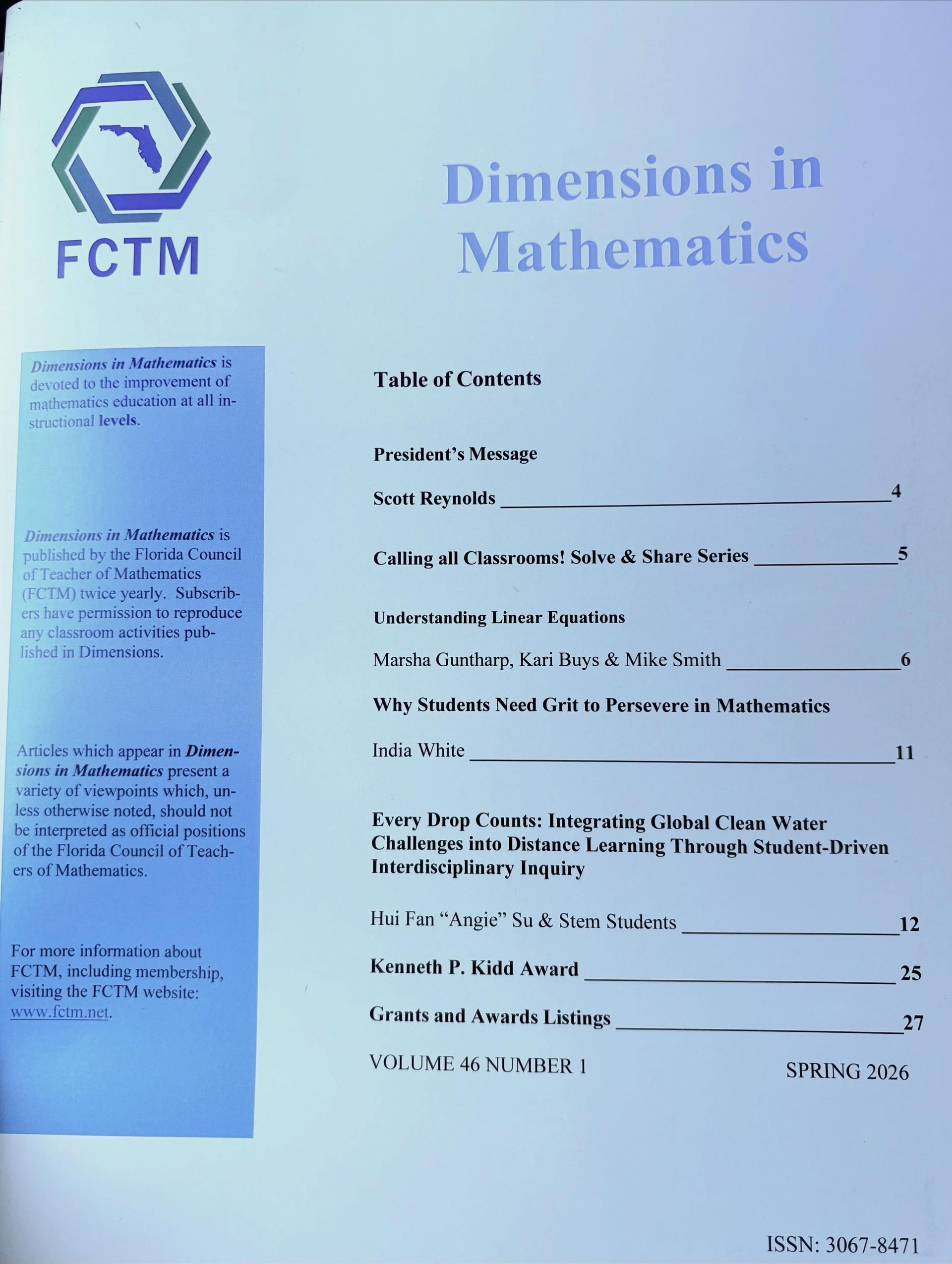
Grateful for the FCTM Dimensions Feature!

Check out my June Newsletter!
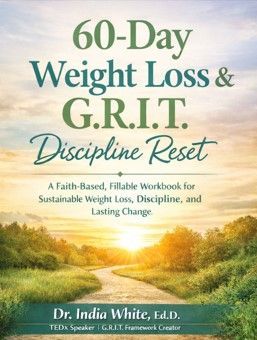
It's Time for a Reset!

Gritty Tips for Moms!

May Newsletter is Here!

Grateful for Degree # 4- M.A.

Gritty to the Finish Line!
🌸✨ Happy April, G.R.I.T. Family! ✨🌸 I’m so excited to share that my April Newsletter is officially LIVE! 🙌🏽📬 This month is filled with growth, gratitude, and powerful momentum, and I couldn’t wait to bring you along on the journey! 💫 🎉 Inside this month’s newsletter: ✨ A special feature with Ultimate Medical Academy and the impactful work we’re doing with universities to build G.R.I.T. in students and leaders 🎓 Celebrating a personal milestone; I’ve completed my Master’s in Christian Leadership! 🎤 Speaking engagements (including the Atlanta Math Conference 👀) 📚 Ways we’re continuing to support students and educators through the G.R.I.T. Framework This season is all about growth, purpose, and impact—and I’m more energized than ever to continue leading leaders nationwide and building strong character through G.R.I.T. 💪🏽🌱 💼 Let’s Partner! I’m currently booking: 🎤 Speaking engagements 📚 G.R.I.T. Academy tutoring 🎯 Consulting services for schools, districts, and universities If you’re ready to bring the G.R.I.T. Movement to your organization, let’s connect! 📩 indiawhiteconsulting@gmail.com Let’s keep growing. Let’s keep leading. Let’s stay G.R.I.T.T.Y.! 💥🔥📚 hashtag#DrIndiaWhite hashtag#GRITMovement hashtag#Leadership hashtag#Education hashtag#NewsletterLaunch hashtag#GrowthMindset hashtag#Resilience hashtag#ChristianLeadership hashtag#LetsGetGritty hashtag#nctm hashtag#ncsm hashtag#bwxme hashtag#n
🎓 A New Chapter: Leading with G.R.I.T. and Purpose I am beyond excited and deeply grateful to share that I have officially completed my Master’s degree in Christian Leadership! 🙌🏽✨ This journey has been one of faith, discipline, sacrifice, and perseverance. There were moments that stretched me, challenged me, and pushed me to grow in ways I never imagined—but through it all, God remained faithful. This accomplishment is not just a degree; it is a testament to the power of G.R.I.T.—Growth Mindset, Resilience, Self-Efficacy, and Time Management—in action. 🌱 A Calling Greater Than a Credential Earning this degree represents more than academic success—it reflects a deeper calling to lead with integrity, serve with humility, and pour into others with purpose. Christian leadership is about influence, impact, and obedience to God’s direction. I am excited to continue equipping and empowering leaders nationwide to build strong character, develop resilience, and walk boldly in their purpose. Through the G.R.I.T. framework, I remain committed to helping educators, students, and leaders not only succeed academically or professionally—but thrive in every area of their lives. 💛 A Heart of Gratitude I would not be here without the incredible support system God placed around me. To the leaders and professors at my university—thank you for your guidance, wisdom, and commitment to developing leaders who serve with excellence and faith. Your investment has made a lasting impact on my journey. To my family—thank you for your unwavering love, encouragement, and sacrifices. You have been my strength during long nights, busy seasons, and moments when I needed an extra push to keep going. To my church family—thank you for your prayers, covering, and spiritual support. Your encouragement has uplifted me more than words can express, and I am grateful to be surrounded by a community that believes in purpose and calling. 🚀 Moving Forward with Purpose As I step into this new season, I am more energized than ever to continue the work of building leaders who are grounded in faith and strengthened by G.R.I.T. The mission continues—to inspire growth, cultivate resilience, develop confident leaders, and steward time with intention. This is just the beginning. Let’s keep building. Let’s keep growing. Let’s keep leading with purpose. With gratitude and excitement, Dr. India White 🌟

Pi Day and the Power of G.R.I.T. in Mathematics Why March 14 is More Than Just a Math Celebration Every year on March 14 (3/14), mathematicians, teachers, and students around the world celebrate Pi Day—a day dedicated to the mathematical constant π (pi). While Pi Day is often filled with pie-themed treats, math games, and creative activities, it also offers a powerful opportunity to help students develop something even more important than memorizing digits of π. It offers a chance to build G.R.I.T. As I often share in my work with educators and students, G.R.I.T. stands for Great Resilience in Time and is built on four pillars: * Growth Mindset * Resilience * Self-Efficacy * Time Management Mathematics is one of the most powerful subjects for cultivating these traits, and Pi Day gives us a fun and meaningful entry point. nderstanding π: A Lesson in Persistence At its core, π (pi) represents the relationship between a circle’s circumference and its diameter. Pi = Circumference/Diameter This constant is approximately 3.14, but mathematicians have calculated trillions of digits beyond the decimal. Think about that for a moment. The digits of π never repeat and never end. Mathematicians throughout history have spent centuries trying to calculate it more accurately. That alone is a lesson in grit. Mathematics often requires patience, perseverance, and the willingness to keep going—even when answers are not immediately obvious. How Pi Day Builds the G.R.I.T. Framework 1. Growth Mindset: Math Is About Learning, Not Perfection Pi Day reminds students that mathematics is not about getting everything right the first time. When students explore circles, approximate π, or investigate how it works, they begin to realize that mistakes are part of discovery. Encouraging students to say: ✨ “I don’t understand this yet.” instead of ❌ “I’m bad at math.” helps shift their mindset toward growth. A growth mindset allows students to embrace mathematical challenges rather than avoid them. 2. Resilience: Productive Struggle Matters One of the most important lessons students learn through mathematics is that struggle is part of the process. When students measure circular objects in the classroom and calculate approximate values for π, they may initially get inconsistent results. Instead of giving up, they must adjust their measurements and try again. This is where resilience grows. In a G.R.I.T. classroom, we remind students: 📌Every mathematician has struggled before discovering something meaningful. Pi itself was not discovered overnight—it took centuries of investigation. 3. Self-Efficacy: Building Confidence Through Exploration Self-efficacy is the belief that “I can do this.” Pi Day activities help students develop that confidence because they experience mathematics in a hands-on, engaging way . Examples include: 🥧 Measuring pies or circular objects 📏 Finding circumference and diameter 🧠 Memorizing digits of π 🎲 Playing Pi-related math games When students successfully apply math concepts in fun ways, they begin to see themselves as capable mathematicians. This belief is critical for long-term success in STEM fields. 4. Time Management: Breaking Big Problems into Steps Another key component of the G.R.I.T. Framework is time management. Mathematics often requires solving complex problems step by step. Pi Day activities can model this by showing students how mathematicians approach difficult problems. For example, students might: 1️⃣ Measure a circle 2️⃣ Record circumference 3️⃣ Measure diameter 4️⃣ Calculate the ratio Breaking the task into manageable steps teaches students that big problems become solvable when approached strategically. Pi Day Is More Than Pie While Pi Day often includes fun traditions like eating pie or reciting digits of π, its deeper value lies in the mindset it cultivates. Mathematics teaches students that: ✔ Learning takes time ✔ Persistence leads to discovery ✔ Mistakes are part of the process ✔ Confidence grows through practice These lessons extend far beyond the math classroom. They prepare students for life. Final Thoughts: Let’s Get Gritty With Math As educators, parents, and leaders, we must remember that mathematics is not just about numbers—it is about developing thinkers, problem solvers, and resilient learners. Pi Day provides the perfect opportunity to celebrate both mathematics and perseverance. When students experience math through the lens of the G.R.I.T. Framework, they begin to understand that success is not about immediate answers. It is about Great Resilience in Time. So this Pi Day, enjoy a slice of pie—but more importantly, encourage students to stay gritty, keep exploring, and never stop learning. Happy Pi Day! ✍🏽 Dr. India White TEDx Speaker | National Education Consultant Creator of the G.R.I.T. Framework (Great Resilience in Time) Empowering educators and students to thrive through perseverance in mathematics. Visit www.india-white.com/books to grab a copy of your Grit Workbook for Teachers!